From the woodyard to the recovery boiler
Pulp & Paper
Woodyard, chip handling, power and recovery
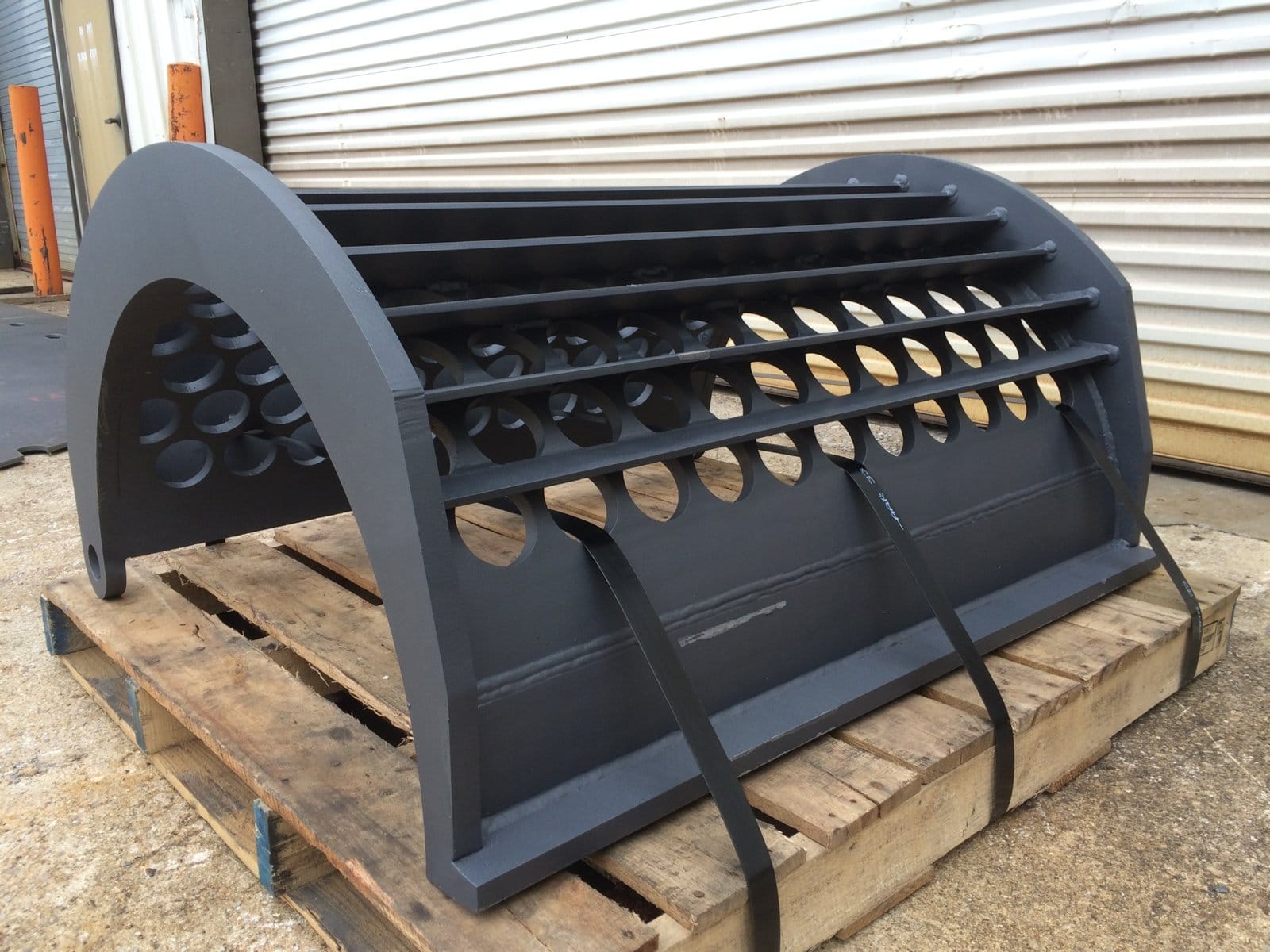
Pictured: Fused Alloy chipper hood
01 The wear you're fighting
Wood chips and bark are abrasive, wet and relentless, and the drag chains, chip bins and conveyors that move them wear around the clock. Past the woodyard, ash, lime and chemicals add corrosion to the list.
Mills across the Southeast and Upper Midwest run TASSCO steel from the woodyard to the recovery boiler. Send us a drawing or your worn part, and we’ll match the grade to each wear zone and build it to fit.
Where it wears first
- Debarking drum liners and lifters
- Chipper spouts, hoods and pipes
- Blow line elbows and cyclone target plates
- Drag chain conveyor liners
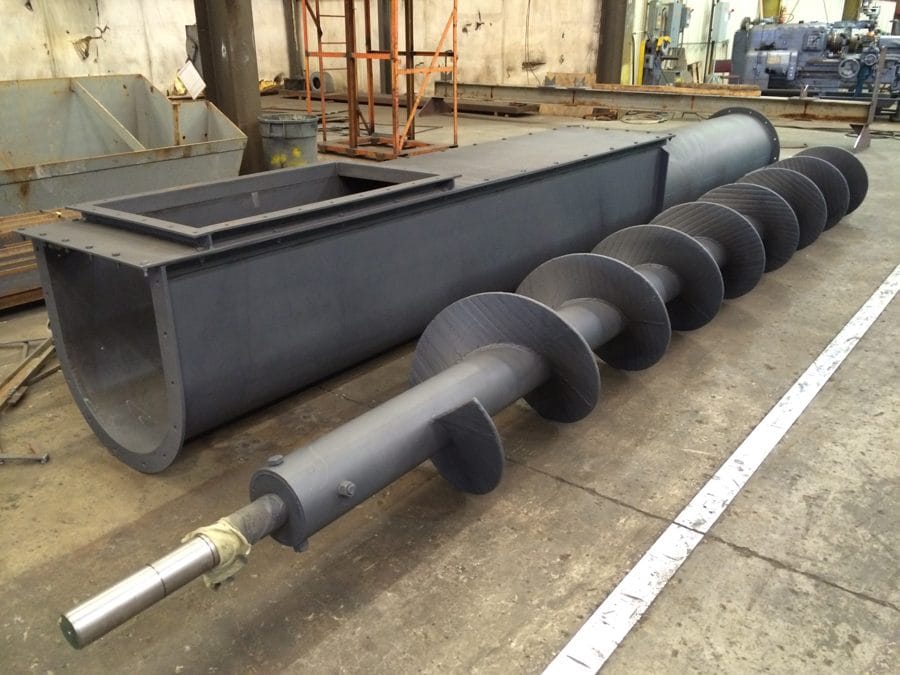
- Bark screws and lime screws
Impact in log handling
Logs tumble through debarking drums and drop onto jackladders, slasher decks and in-feed conveyor pans. Those zones need through-hardened plate that takes repeated hits and stays flat.
Wet bark and chips that wear and corrode
Bark and chips carry water and sand into screws, troughs and chip bins. Abrasion and corrosion work together there, so a plate built to handle both lasts longer between changeouts.
Chips at speed in the blow line
Chips leave the chipper and travel through pipes, elbows and spouts at speed, then hit cyclone target plates. Wherever the flow turns, it cuts, and a smooth fused overlay holds up there and keeps chips moving.
Ash, lime and chemical service
In the power house and recovery area, ash drags, lime screws and precipitator chutes handle fine, abrasive material that's often wet and corrosive. The right grade depends on which one drives the wear, and many zones see both.
2–3×
In the field
Drag-chain liner life at a Wisconsin pulp mill with TASSCO plate, compared with AR400 and AR500.
02 What TASSCO builds
Built off your spare set, or measured on the machine
Woodyard and log handling
- Log in-feed and return conveyor pans
- Jackladder wear plates, power feed decks
- Slasher decks and de-icing conveyors
Debarking and bark handling
- Debarking drum liners, lifters, lip liners
- Bark screws and troughs
- Transfer, splitter and diverter chutes
Chipping
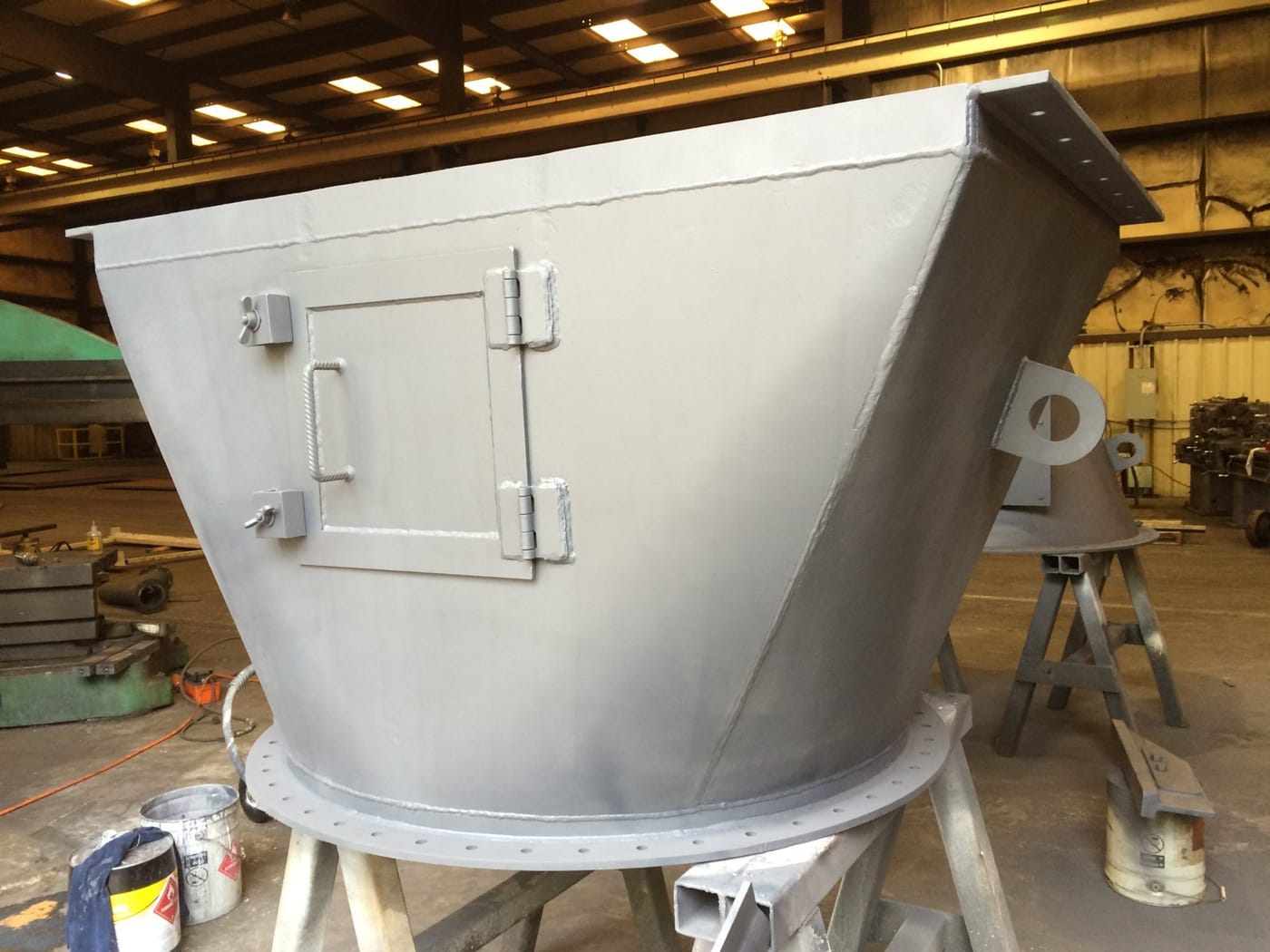
- Chipper in-feed and discharge chutes
- Chipper pipes and hoods
- Rechipper housings and sidewalls
Blow line and chip handling
- Blow line piping, elbows and spouts
- Spools and transitions
- Cyclones and target plates
Power and boiler
- Ash drag conveyor liners
- Screw conveyors
- ID fan housing and blade liners
Recovery and chemical
- Lime screws and troughs
- Lime transfer chutes
- Precipitator chutes
03 Right grade, right wear zone
The grades pulp & paper customers run
Every grade ships from stock as plate, cut to size, or fully fabricated. Every TASSCO product works here; these are the ones matched to your wear zones.
Fused Alloy
Fusion-bonded chromium carbide overlay
- Chutes where chips must keep moving
- Cyclone target plates
CORRHARD
12% chromium martensitic stainless, 3/16″ to 1″
- Wet and corrosive zones
- Lime and chemical handling
COMP-C
Welded chromium carbide overlay, 3/8″ to 1½″
- Bark screws and hog liners
- High-abrasion flow
Magna Tuff
Modular magnetic rubber liner system
- Running-line patches
- No hot work permit needed
Flagship grade · Melted and made in USA
TASSCO XT
Hard from face to centerline, consistent from heat to heat, and your shop welds it with standard procedure. Stocked 3/16″ to 1″.
04 Shop-built, field-proven
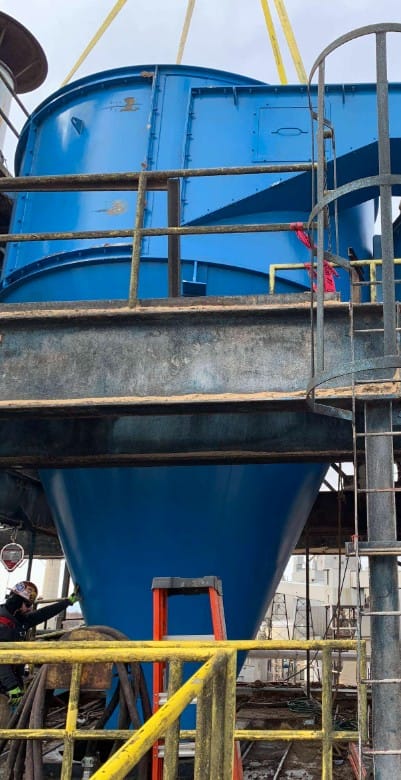
XT cyclone, Fused Alloy target plates 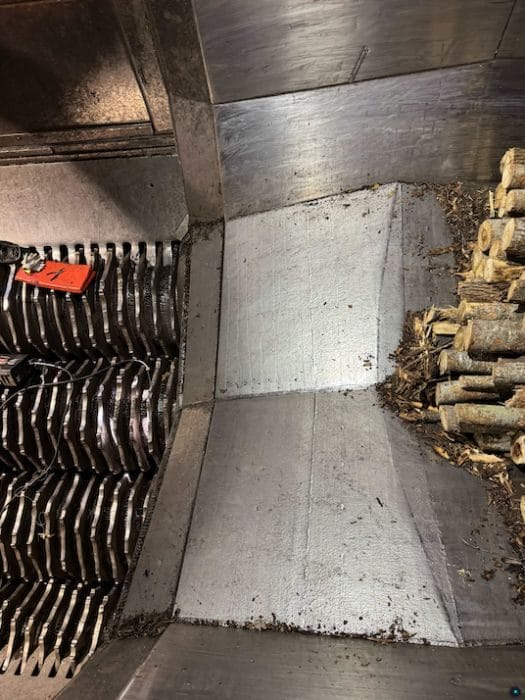
½″ Fused Alloy debarker in-feed chute 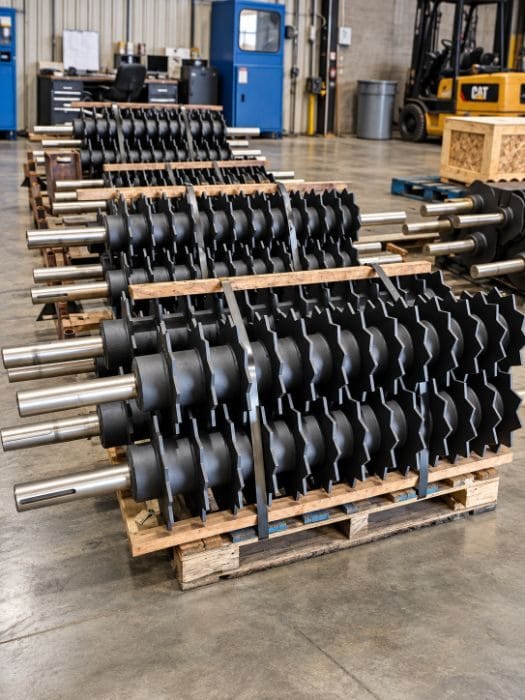
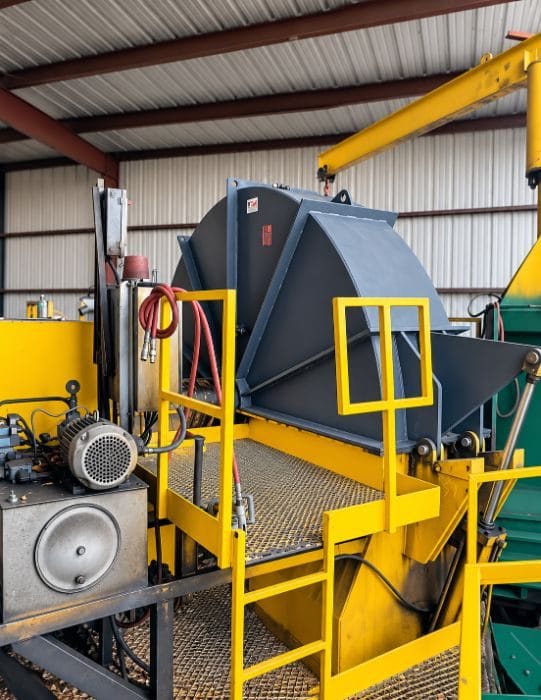
XT bark scalping discs
05 · How we work
One supplier, one number to call
Measure
Off your spare set, off the machine, or with LiDAR scanning and DEM modeling.
Draw
Grade, thickness, holes and bends. Kept on file for next time.
Fabricate
Cut, formed, rolled, beveled and drilled in our Birmingham shop.
Deliver
Marked and kitted for the changeout, ready to bolt up or weld in.
Questions we hear
Pulp & Paper wear questions
Want it all on two pages? Download the Pulp & Paper guide (PDF).
What's the best liner for a chipper hood or chip chute?
Mills use Fused Alloy where chips need to keep moving. It's a fusion-bonded chromium carbide overlay with a smooth, bead-free face and about twice the life of welded CCO, and it rolls into pipes, cones and transitions. It's a common choice for cyclone target plates too.
What wear plate holds up in wet, corrosive areas of a paper mill?
CORRHARD, a 12% chromium martensitic stainless plate with nearly twice the hardness of 304 and similar corrosion resistance. Mills use it in wet and corrosive zones and for lime and chemical handling. It's magnetic, so don't swap it in where 304 runs under a magnet.
What should I line bark screws and hog liners with?
COMP-C, a 60 HRC chromium carbide overlay welded to a mild steel base. It takes the sliding abrasion in bark screws, hog liners and other high-abrasion flow, and the base forms and welds with conventional shop practice.
How do I patch a worn chute without hot work?
Magna Tuff modules snap on by hand with rare-earth magnets, and mills use them for running-line patches. There's no welding and no hot work permit. They're 40 Shore A rubber, cut to fit with a knife, and rated for 170°F continuous.
Let's talk
Tell us what's wearing out. We'll have your back.
Call us or send a note below. You'll hear back from a real person, fast.