Keep the board line fed
Gypsum & Wallboard
Dryers, calciners, mills and conveying systems
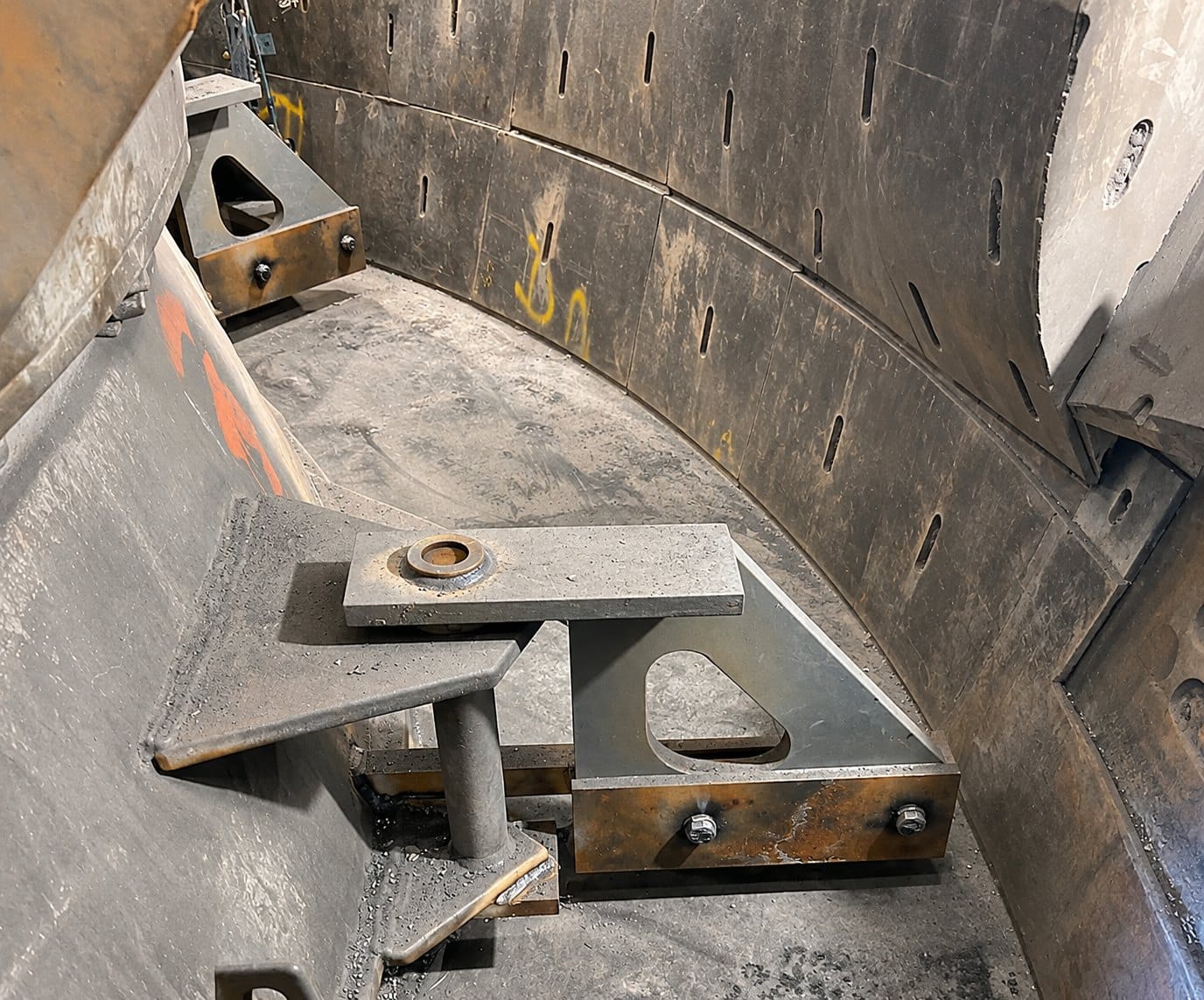
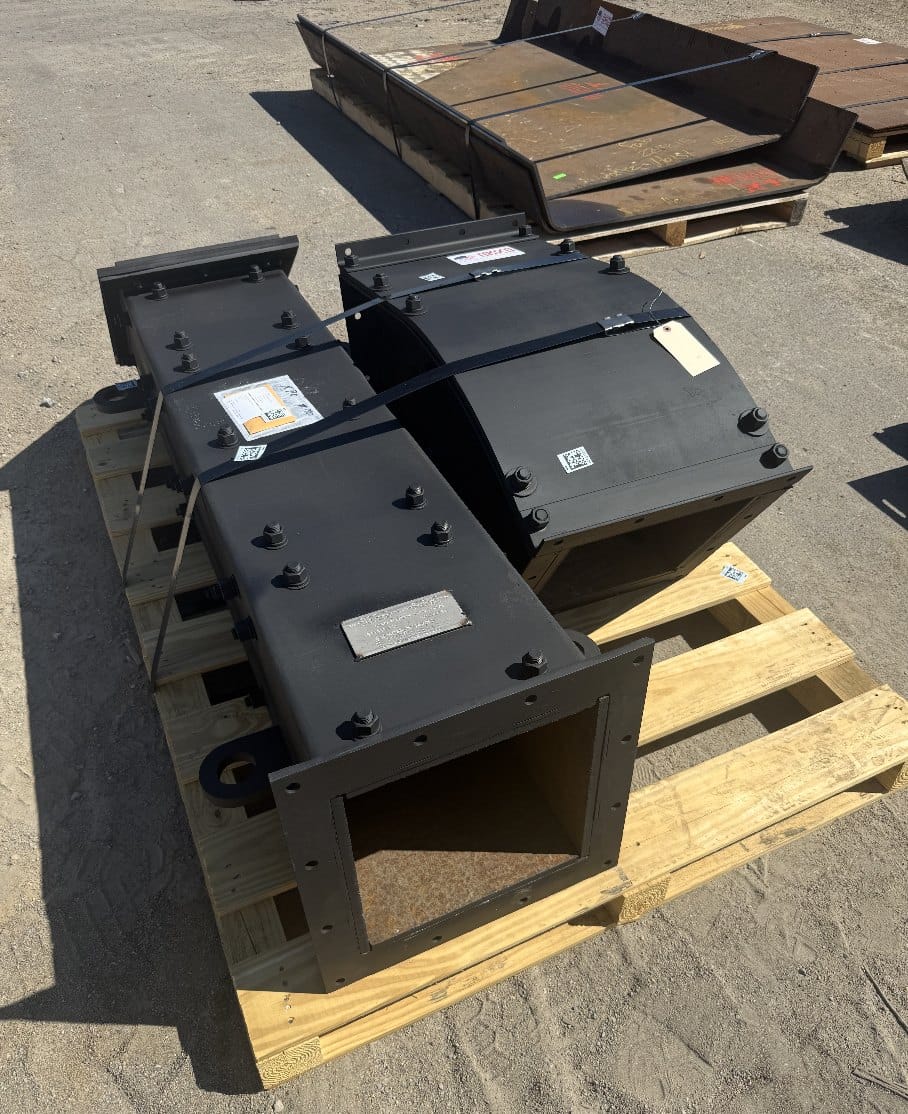
Pictured: Lined chute sections, ready to ship
01 The wear you're fighting
Synthetic gypsum arrives wet, and by the time it's dried, ground and calcined, it has worked on every chute, flight, elbow and mill liner along the way. Each one that fails early starves the board line.
You’ll get liner packages, wear parts, dryer flights and pipe for everything from the synthetic gypsum pad to the mixer. We measure the part, match the grade to the zone, and fabricate it in our Birmingham shop.
Where it wears first
- Truck dump hoppers and apron feeders
- Rotary dryer lifter flights
- Mill liners and dryer discharge chutes
- Pneumatic conveying elbows
- Bucket elevator boots and heads
- Silo discharge cones
Wet synthetic gypsum at receiving
Synthetic gypsum shows up damp and carries chlorides, so truck dump hoppers, feeders and transfer chutes see corrosion and abrasion at the same time. A stainless wear plate handles both, and a low-friction face keeps wet material moving.
Abrasion through drying and grinding
Lifter flights tumble gypsum through the dryer, and roller and cage mills reduce it to powder. Those parts wear every hour the line runs, so flights cut from through-hardened plate and liners matched to each mill zone pay off fast.
Fine powder at high velocity
Calcined stucco moves through pneumatic lines quickly, and it cuts the outside of every long-radius elbow, diverter and airlock. Chromium carbide overlay elbows and wear backs hold up where plain pipe wears through.
Leaks you can't shut down for
A worn-through chute or elbow on a running line puts powder in the air and on the floor. Magnetic rubber modules patch the cooler sections by hand until your next outage, with no welding.
02 What TASSCO builds
Built off your spare set, or measured on the machine
Synthetic gypsum receiving
- Truck dump hopper and apron feeder liners
- Stacker and reclaim transfer chutes
- Skirtboard liners
Drying and grinding
- Rotary dryer lifter flights in XT
- Dryer feed and discharge chutes
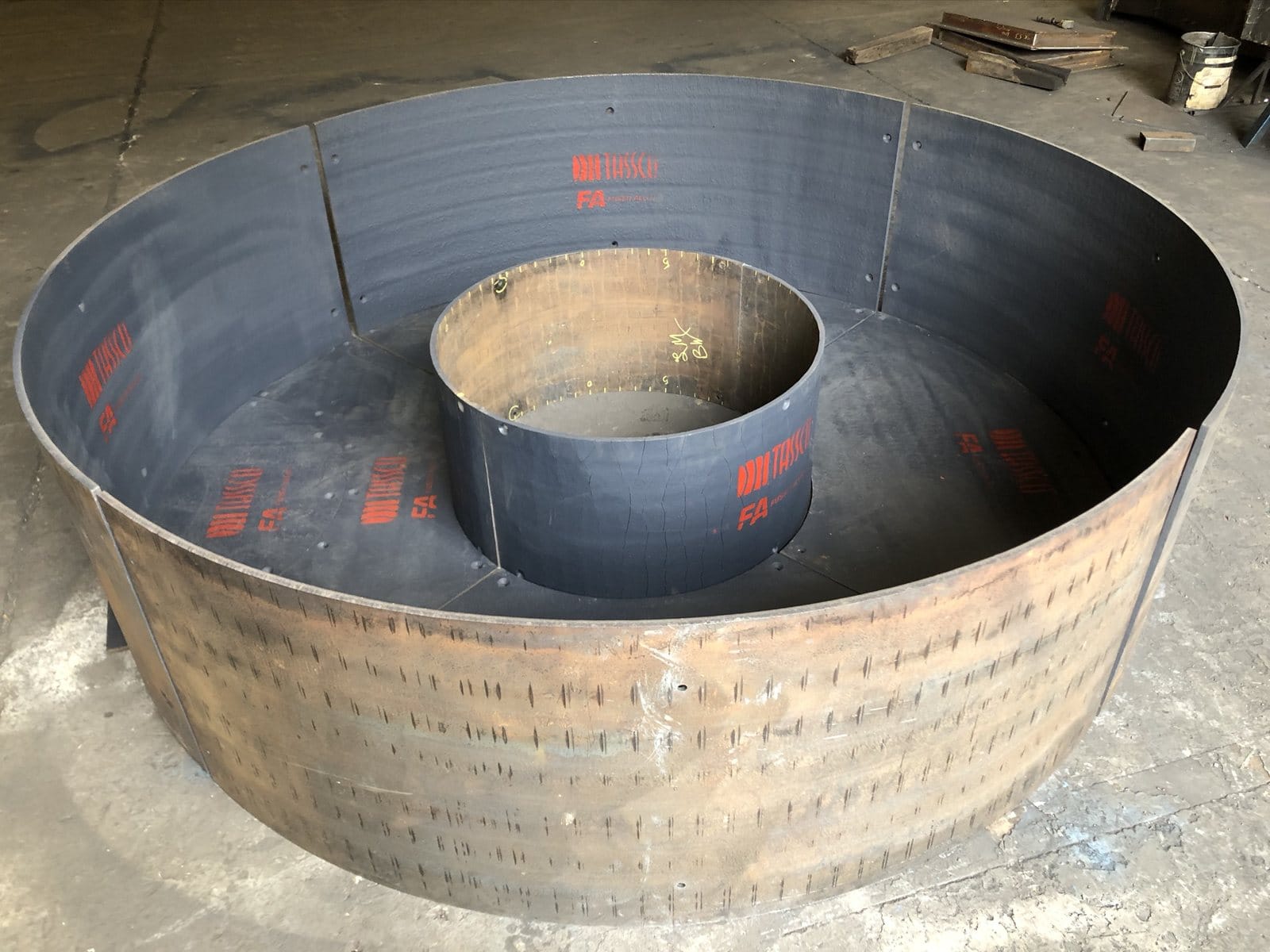
- Roller and cage mill liners and chutes
Calcining
- Kettle calciner feed screws
- Calciner discharge chutes
- Flash calciner and impact mill liners
Pneumatic and mechanical conveying
- Long-radius elbows and wear backs
- Diverter valve and airlock wear plates
- Bucket elevator boot and head liners
Storage and dust collection
- Silo discharge cones, live-bottom liners
- Dust collector hoppers, discharge screws
- Fan housing and ID fan blade liners
Board line and scrap reclaim
- Reclaim grinder and hammer mill liners
- Reclaim feeder and screw liners
- Paper separation screen decks
03 Right grade, right wear zone
The grades gypsum & wallboard customers run
Every grade ships from stock as plate, cut to size, or fully fabricated. Every TASSCO product works here; these are the ones matched to your wear zones.
CORRHARD
12% chromium martensitic stainless, 3/16″ to 1″
- Truck dump hoppers and feeders
- Wet gypsum transfer chutes
COMP-C
Welded chromium carbide overlay, 3/8″ to 1½″
- Long-radius elbows
- Classifier cones
Fused Alloy
Fusion-bonded chromium carbide overlay
- Feeder and chute liners
Magna Tuff
Modular magnetic rubber liner system
- Patches on a running line
- No hot work permit needed
Flagship grade · Melted and made in USA
TASSCO XT
Hard from face to centerline, consistent from heat to heat, and your shop welds it with standard procedure. Stocked 3/16″ to 1″.
04 Shop-built, field-proven
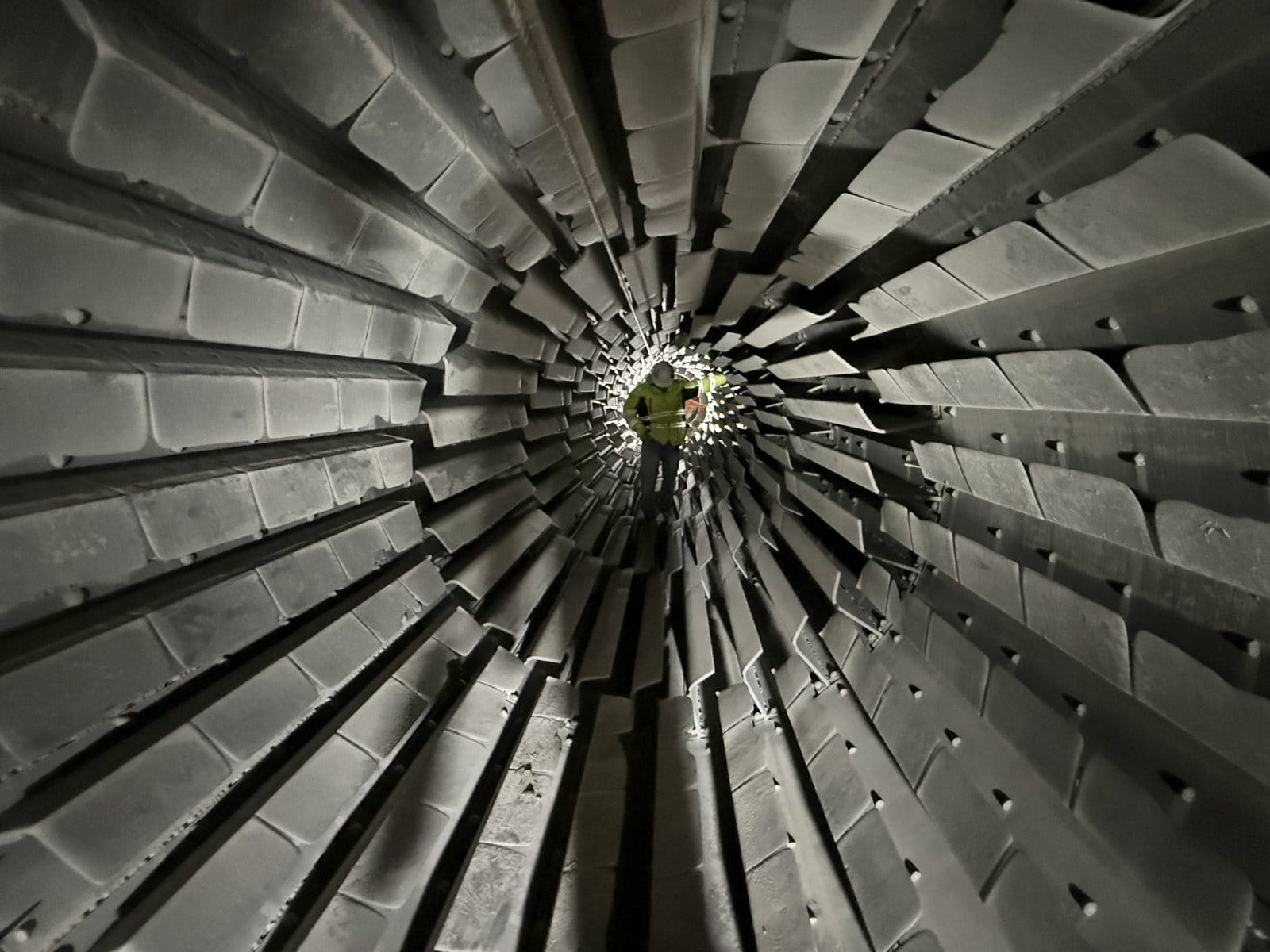
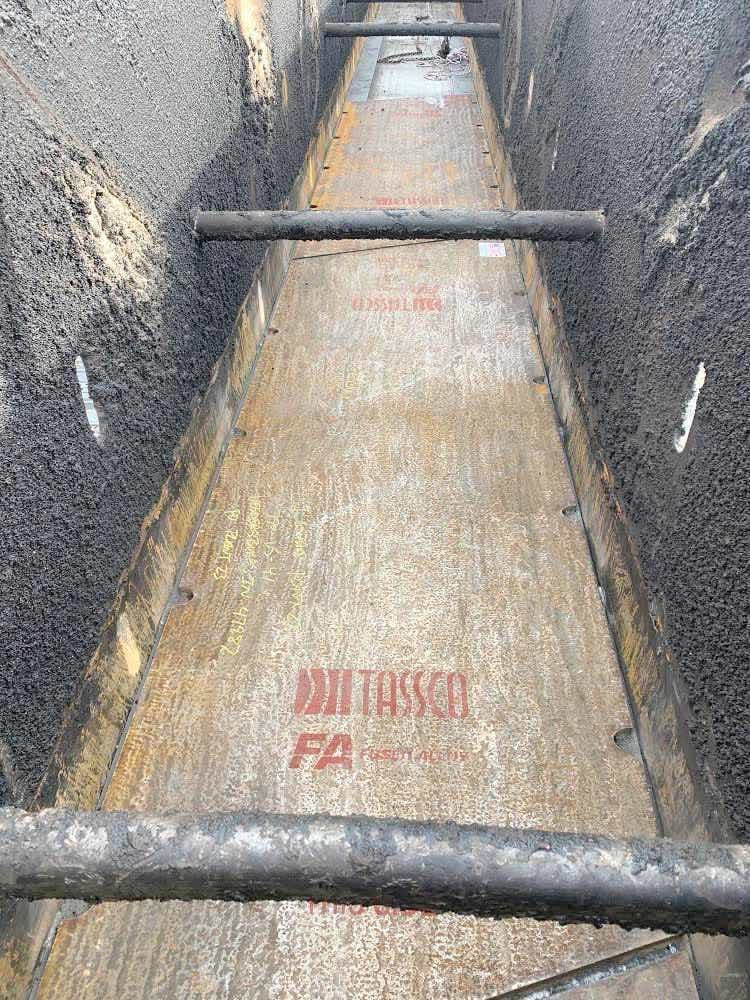
Rotary dryer lifter flights 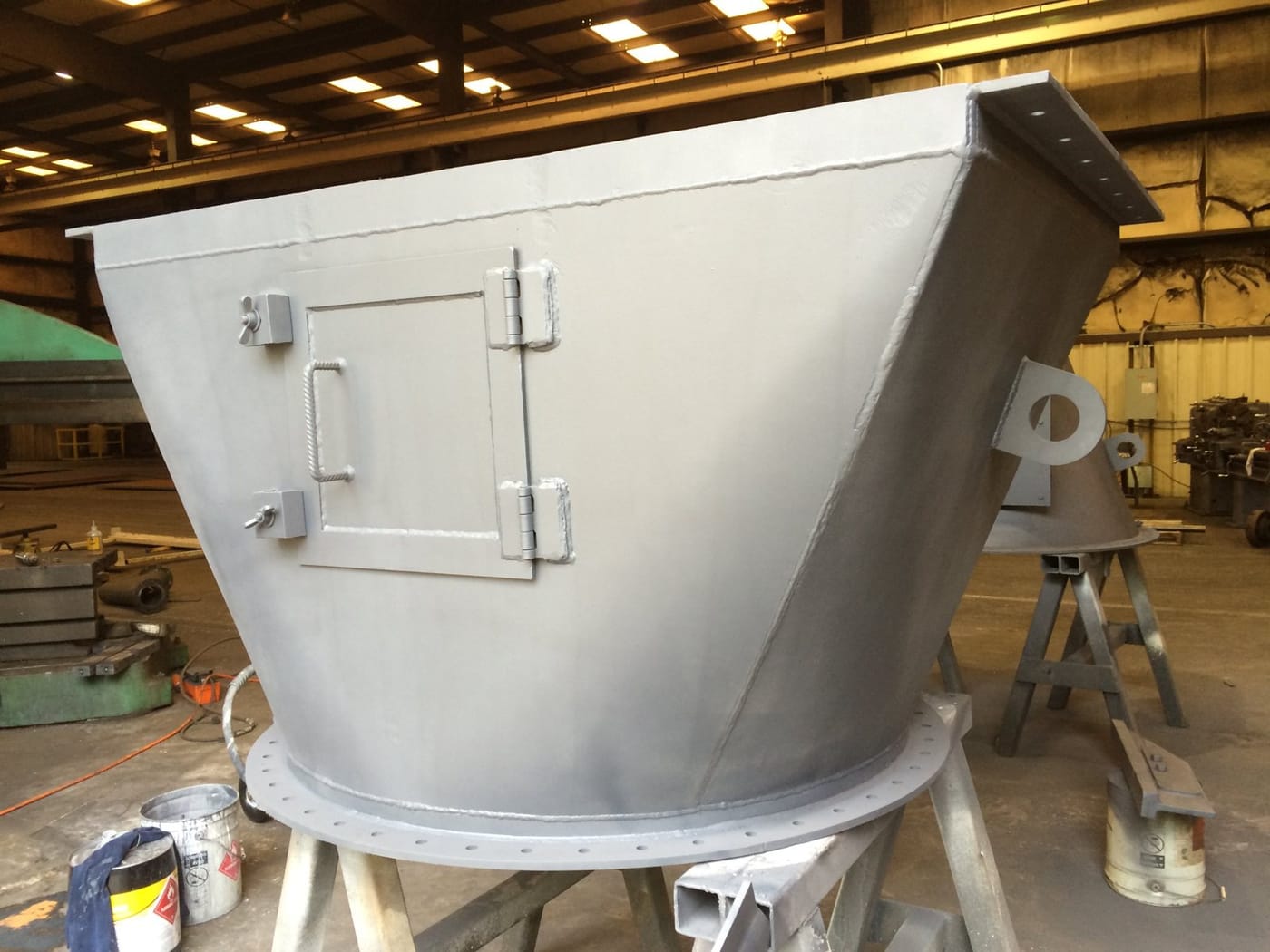
Fabricated transition chute
05 · How we work
One supplier, one number to call
Measure
Off your spare set, off the machine, or with LiDAR scanning and DEM modeling.
Draw
Grade, thickness, holes and bends. Kept on file for next time.
Fabricate
Cut, formed, rolled, beveled and drilled in our Birmingham shop.
Deliver
Marked and kitted for the changeout, ready to bolt up or weld in.
Questions we hear
Gypsum & Wallboard wear questions
Want it all on two pages? Download the Gypsum & Wallboard guide (PDF).
What liner holds up to wet synthetic gypsum in hoppers and chutes?
CORRHARD is a good fit for truck dump hoppers, feeders and wet gypsum transfer chutes. It's a 12% chromium martensitic stainless plate with nearly twice the hardness of 304 and similar corrosion resistance, and your shop welds it with standard 309L practice. It's magnetic, so don't use it where 304 runs beneath a magnet.
How do I stop stucco from wearing through pneumatic conveying elbows?
Line long-radius elbows and wear backs with COMP-C. It puts a 60 HRC chromium carbide face on a mild steel base that forms and welds with conventional practice, and it works on classifier cones too.
Can I patch a worn chute without a hot work permit?
Yes. Magna Tuff modules are rubber with rare-earth magnets built in. One person snaps them onto any ferrous surface by hand and cuts them to fit with a knife. They're rated for 170°F continuous and 200°F for short stretches, so use them on the cooler sections of the line.
What material should I use for rotary dryer lifter flights?
We build lifter flights from TASSCO XT. It's through-hardened to 477 BHN from face to centerline, so a flight keeps working as it wears down, and it's stocked from 3/16″ to 1″.
Let's talk
Tell us what's wearing out. We'll have your back.
Call us or send a note below. You'll hear back from a real person, fast.