From the barge to the stack
Coal-Fired Power Generation
Coal handling, pulverizers, boilers and ash
01 The wear you're fighting
Fuel and ash handling never stops. The unloader buckets, pulverizers, chutes and ash conveyors that carry it wear from abrasion and corrosion at the same time, so the parts you install each outage need to last to the next one.
Plant outages are planned months ahead. Tell us what’s on the list and we’ll have the material ready when the window opens.
Where it wears first
- Unloader buckets and track hopper liners
- Pulverizer housings, cones and tire shields
- Crusher cages and screen plates
- Fly ash and bottom ash conveyors
- Bunker, silo and head chute liners
Abrasion and corrosion together in coal handling
Wet coal and fines scrub unloader buckets, track hoppers and bunker liners while moisture and sulfur go to work on the steel underneath. Plate that only fights one of those loses to the other, so these zones call for a grade built for both.
Sliding abrasion inside the pulverizer
Coal, pyrite and rock circulate past housing liners, tire shields, turning vanes and classifier cones at speed. Hard overlay holds the mill's geometry between rebuilds, so it keeps grinding the way it was set up to.
Erosion in the gas path
Burner nozzles, ID fan blades and SCR mixer collars sit in hot, ash-laden gas that cuts metal wherever the flow turns or speeds up. Chromium carbide overlay protects those edges and housings.
Ash that packs and corrodes
Fly ash is fine and abrasive, and bottom ash comes out wet. Both pack into rough surfaces and wear through elbows, scroll liners and conveyor pans. A smooth face lets ash release, and corrosion-resistant plate holds up in wet and scrubber service.
6 yrs+
In the field
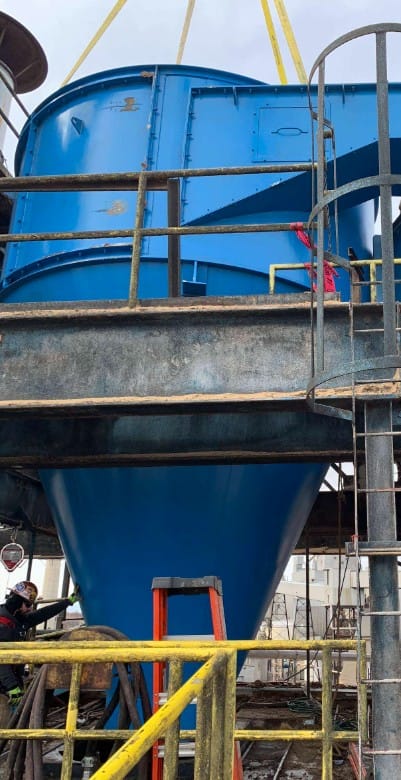
A power cooperative's barge-unloader buckets went from a two-year replacement cycle to six years and counting on CORRHARD.
02 What TASSCO builds
Built off your spare set, or measured on the machine
Pulverizers
- Pulverizer housing liner sets
- Tire shields and turning vane liners
- Classifier cones, mill cones, bottom plates
Coal receiving and yard
- Unloader bucket assemblies, digging ladders
- Car dump and track hopper liners
- Stacker and reclaimer chutes and flights
Crushing and sizing
- Crusher cages and screen plates
- Rotary breaker screen plates and lifters
- Crusher side and hopper frame liners
Boiler and emissions control
- Burner nozzle diffusers and burner cones
- ID fan blades, housings, tube shields
- SCR static mixer discs and collars
Ash handling
- Fly ash chute transitions and scroll liners
- Fly ash screw conveyors and troughs
- Bottom ash conveyor liners and elbows
Chutes and flow control
- Head chutes with diverter gates
- Square-to-round and crusher transitions
- Bunker, silo and feeder hopper liners
03 Right grade, right wear zone
The grades coal-fired power generation customers run
Every grade ships from stock as plate, cut to size, or fully fabricated. Every TASSCO product works here; these are the ones matched to your wear zones.
Fused Alloy
Fusion-bonded chromium carbide overlay
- Bottom ash conveyors, smooth face so ash releases
- Shape cut liners with countersunk bolt holes, stud welds, drilled and tapped holes or plug weld holes
CORRHARD
12% chromium martensitic stainless, 3/16″ to 1″
- Fly ash and scrubber service
- Wet coal fines
COMP-C
Welded chromium carbide overlay, 3/8″ to 1½″
- Clad ash elbows and dead boxes
- SCR mixer collars
Magna Tuff
Modular magnetic rubber liner system
- Worn-through spots in chutes
- No hot work permit needed
Flagship grade · Melted and made in USA
TASSCO XT
Hard from face to centerline, consistent from heat to heat, and your shop welds it with standard procedure. Stocked 3/16″ to 1″.
04 Shop-built, field-proven
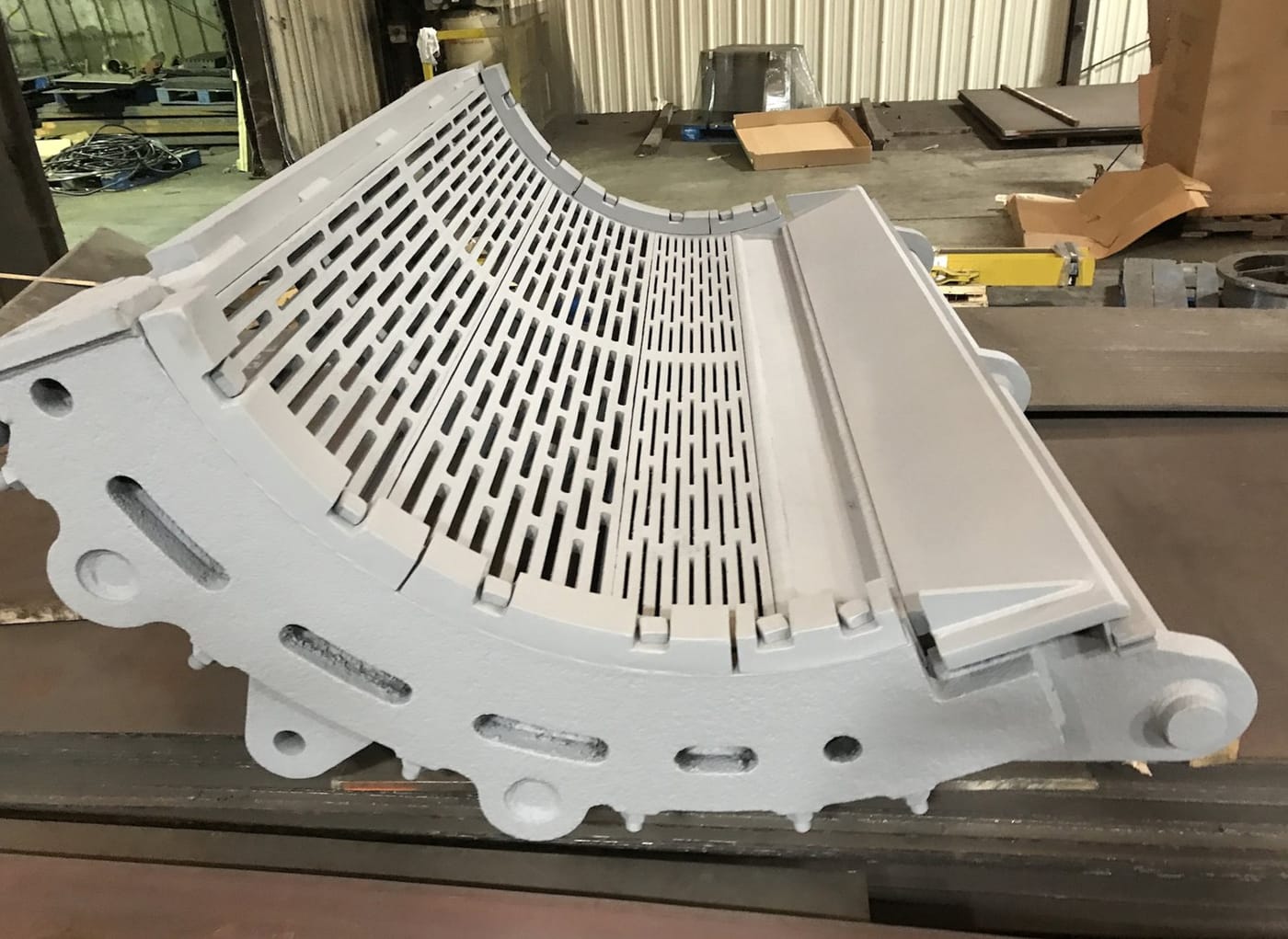
Pennsylvania Crusher cage with screen plates 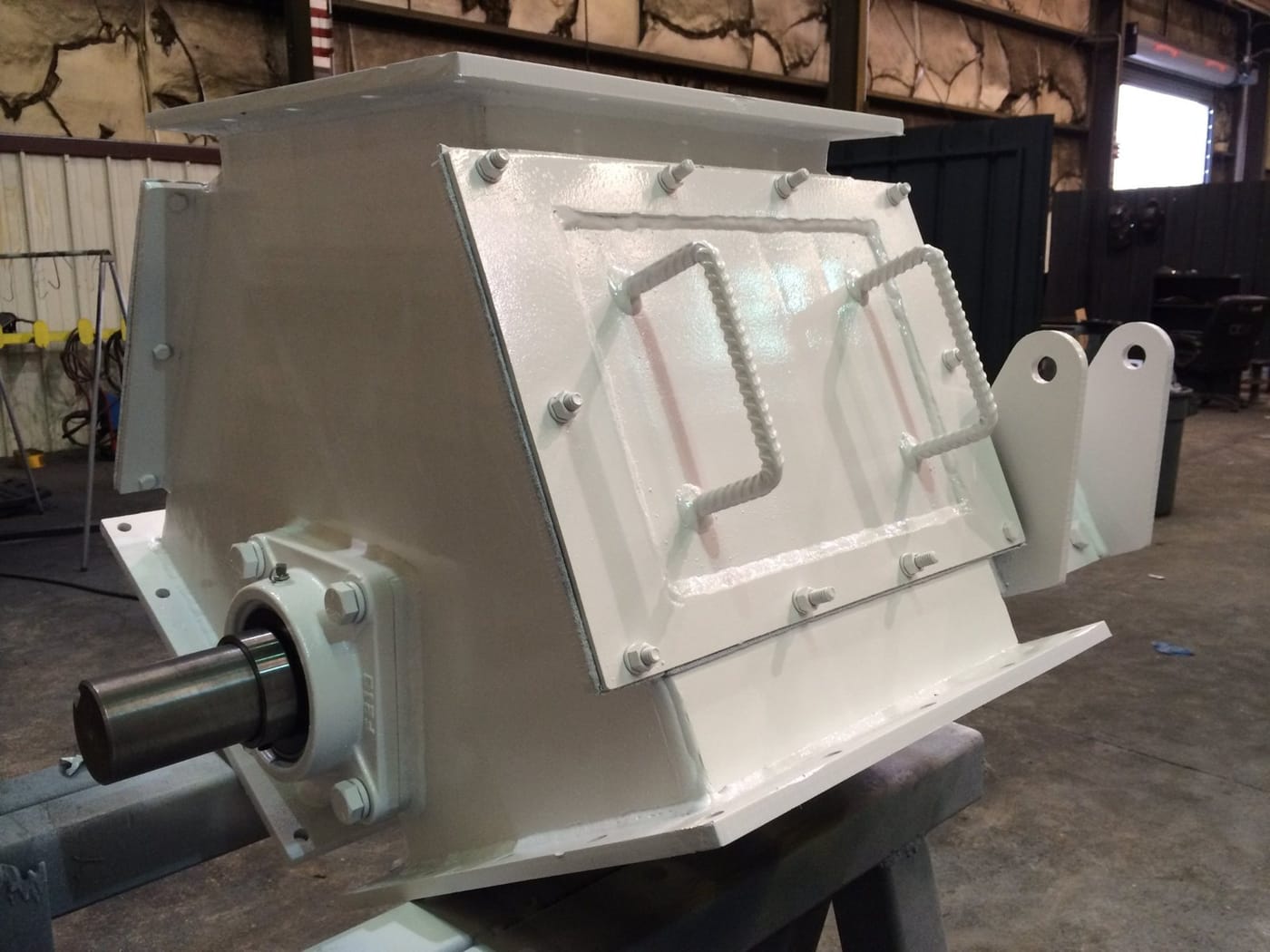
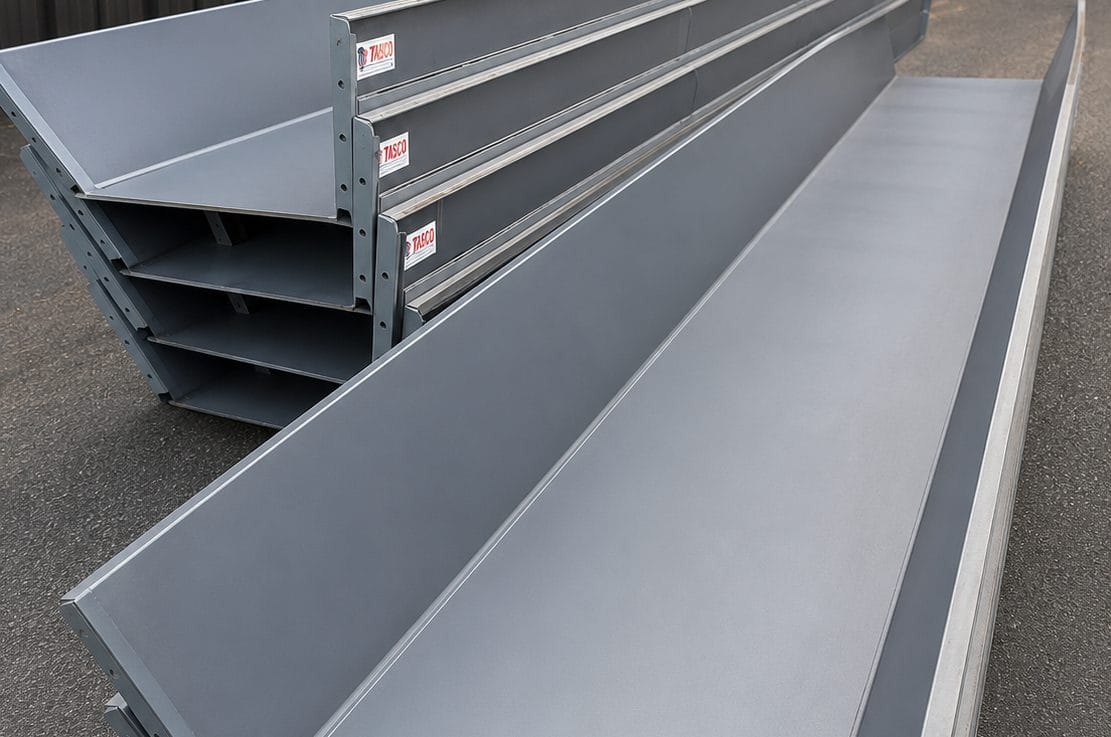
Diverter chute, built in house
Precision Flow · Engineered transfer chutes
Steady flow, less dust, longer belts
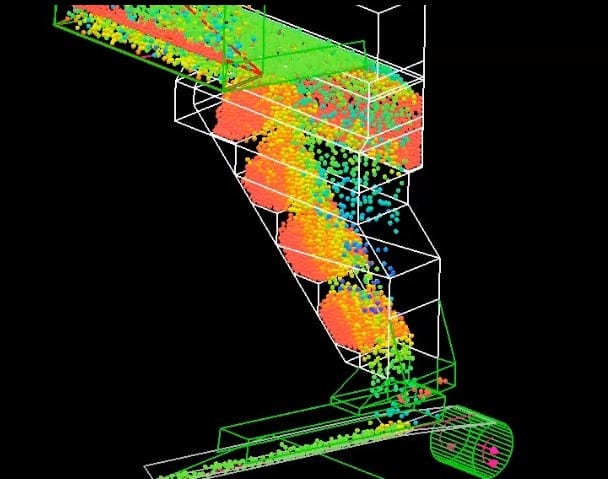
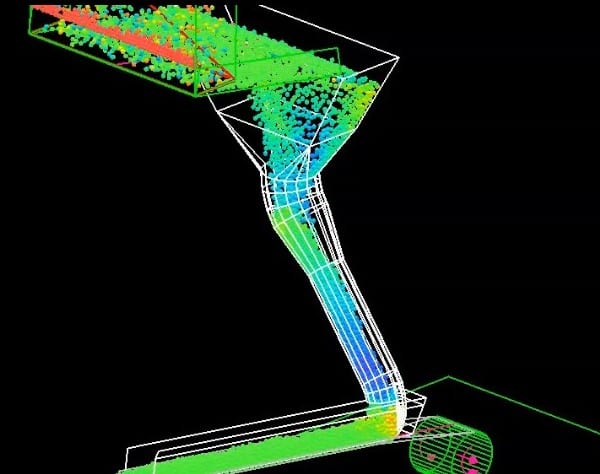
Precision Flow fixes the transfer points that plug, spill, throw dust or chew up belts. We scan the chute, model your material with DEM, and redesign it so the stream lands centered and at belt speed. You see it work in the model before we cut any steel.
05 · How we work
One supplier, one number to call
Measure
Off your spare set, off the machine, or with LiDAR scanning and DEM modeling.
Draw
Grade, thickness, holes and bends. Kept on file for next time.
Fabricate
Cut, formed, rolled, beveled and drilled in our Birmingham shop.
Deliver
Marked and kitted for the changeout, ready to bolt up or weld in.
Questions we hear
Coal-Fired Power Generation wear questions
Want it all on two pages? Download the Coal-Fired Power Generation guide (PDF).
What's the best liner for a bottom ash conveyor?
Most plants use Fused Alloy. It's a fusion-bonded chromium carbide overlay with a smooth, bead-free face, so wet ash releases and doesn't pack up. We shape cut liners with countersunk bolt holes, stud welds, drilled and tapped holes or plug weld holes to fit your conveyor.
What wear plate holds up to fly ash and wet coal corrosion?
CORRHARD, a 12% chromium martensitic stainless plate. It runs nearly twice the hardness of 304 with similar corrosion resistance, and it's rated for 3–5× the life of 304 stainless where abrasion and corrosion meet. Plants use it in fly ash and scrubber service and for wet coal fines.
How do I patch a worn-through coal chute without hot work?
Magna Tuff modules are 40 Shore A rubber with rare-earth magnets built in. One person snaps them on by hand over the worn spot, with no welding, no fasteners and no hot work permit. They're rated for 170°F continuous, so keep them out of hot ash service.
Can you redesign a coal transfer chute that keeps plugging?
Yes. Precision Flow redesigns the chute in a flow model before any steel is cut. We then build it in our Birmingham shop, with head chutes, diverter gates and transitions lined in the grade each zone needs.
Let's talk
Tell us what's wearing out. We'll have your back.
Call us or send a note below. You'll hear back from a real person, fast.