From the ship to the stockpile
Bulk Terminals & Ports
Unloaders, hoppers, transfer chutes, stackers and shiploaders
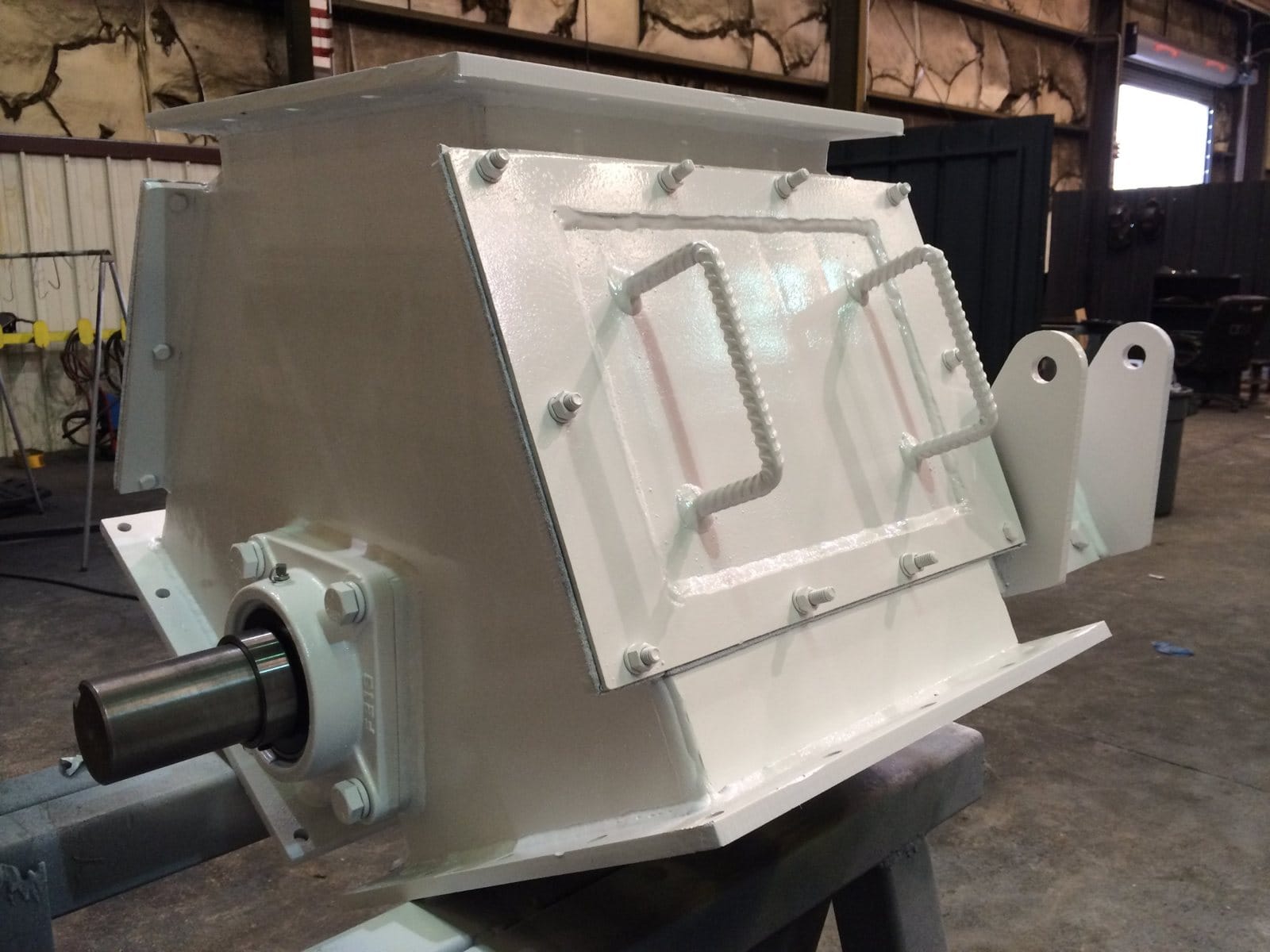
Pictured: Diverter chute, built in house
01 The wear you're fighting
Your terminal runs on tons per hour, and every ton passes through a hopper, chute or spout on its way. Coal, ore, aggregate and fertilizer each wear steel in their own way, and the liner that fails first decides when you stop loading.
You’ll find TASSCO liners at dry bulk terminals moving coal, ore, aggregate and fertilizer by ship, barge, rail and truck. We measure your equipment, match the grade to each wear zone, and build it in Birmingham.
Where it wears first
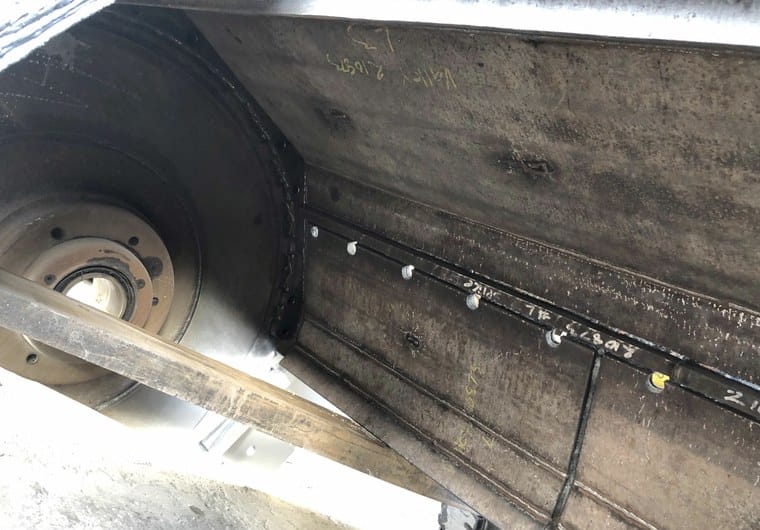
- Grab buckets and unloader hopper liners
- Railcar and truck dump hopper liners
- Transfer chutes and rock boxes
- Skirtboards and impact zone liners
- Shiploader spouts and loading chutes
- Loader buckets and dozer blades
Impact at the grab and the dump
Grab buckets drop cargo into unloader hoppers, and railcars and trucks dump full loads onto grizzly bars and impact plates. That's heavy impact from height, so those zones need thick, through-hardened plate that won't crack.
Sliding abrasion at every transfer
Once cargo is on the belt, it slides through transfer chutes, skirtboards, stacker chutes and loading spouts. Ore and aggregate scrub those liners hour after hour, and chromium carbide overlay holds up where plain plate wears thin.
Salt air and corrosive cargo
Port equipment works in salt air and washdown, and cargoes like fertilizer, salt and wet coal attack steel while they wear it. A hard stainless plate handles abrasion and corrosion in one liner.
Sticky cargo that hangs up
Wet coal, fertilizer and fines cling to weld beads and rough corners, then bridge in chutes and spouts. A smooth, bead-free face keeps cargo moving, and a chute shaped around the material's flow keeps it from piling up in the first place.
02 What TASSCO builds
Built off your spare set, or measured on the machine
Ship and barge unloading
- Grab and clamshell bucket liners
- Continuous unloader buckets and boots
- Unloader hopper and feeder liners
Rail and truck receiving
- Railcar and truck dump hopper liners
- Apron and belt feeder skirt liners
- Grizzly bars and impact plates
Stacking and reclaiming
- Stacker and reclaimer transfer chutes
- Bucket wheel buckets and cutting lips
- Boom conveyor head chutes
Conveyors and transfer towers
- Transfer chute liners and rock boxes
- Skirtboard and impact zone liners
- Chute redesigns with DEM modeling
Ship and barge loading
- Shiploader spout and trimmer liners
- Loading chute and diverter liners
- Surge bin and hopper liners
Yard equipment
- Loader bucket liner packages
- Dozer blade liners and cutting edges
- Range Tuff bars, buttons, bolt protectors
03 Right grade, right wear zone
The grades bulk terminals & ports customers run
Every grade ships from stock as plate, cut to size, or fully fabricated. Every TASSCO product works here; these are the ones matched to your wear zones.
Fused Alloy
Fusion-bonded chromium carbide overlay
- Transfer chutes and loading spouts
- Smooth face so sticky cargo keeps moving
TASSCO HD
Heavy-gauge wear plate, 1¼″ to 5″
- Grab bucket and hopper impact zones
- Grizzly bars and impact plates
CORRHARD
12% chromium martensitic stainless, 3/16″ to 1″
- Fertilizer, salt and wet coal service
- Hoppers in salt air and washdown
COMP-C
Welded chromium carbide overlay, 3/8″ to 1½″
- Skirtboards and chute liners
- High-abrasion transfer points
Flagship grade · Melted and made in USA
TASSCO XT
Hard from face to centerline, consistent from heat to heat, and your shop welds it with standard procedure. Stocked 3/16″ to 1″.
04 Shop-built, field-proven
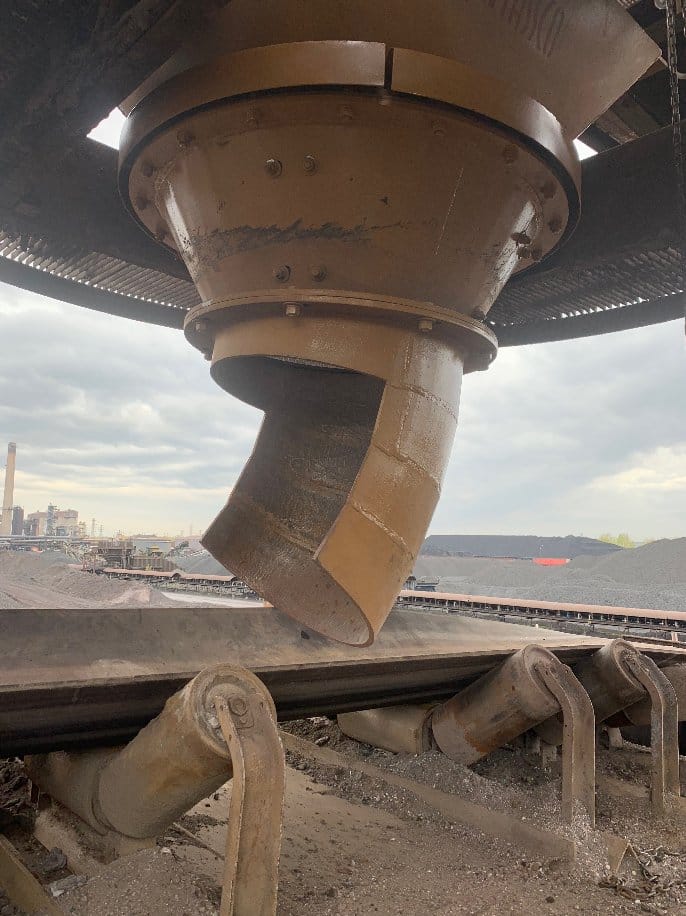
Precision Flow loading chute, in service 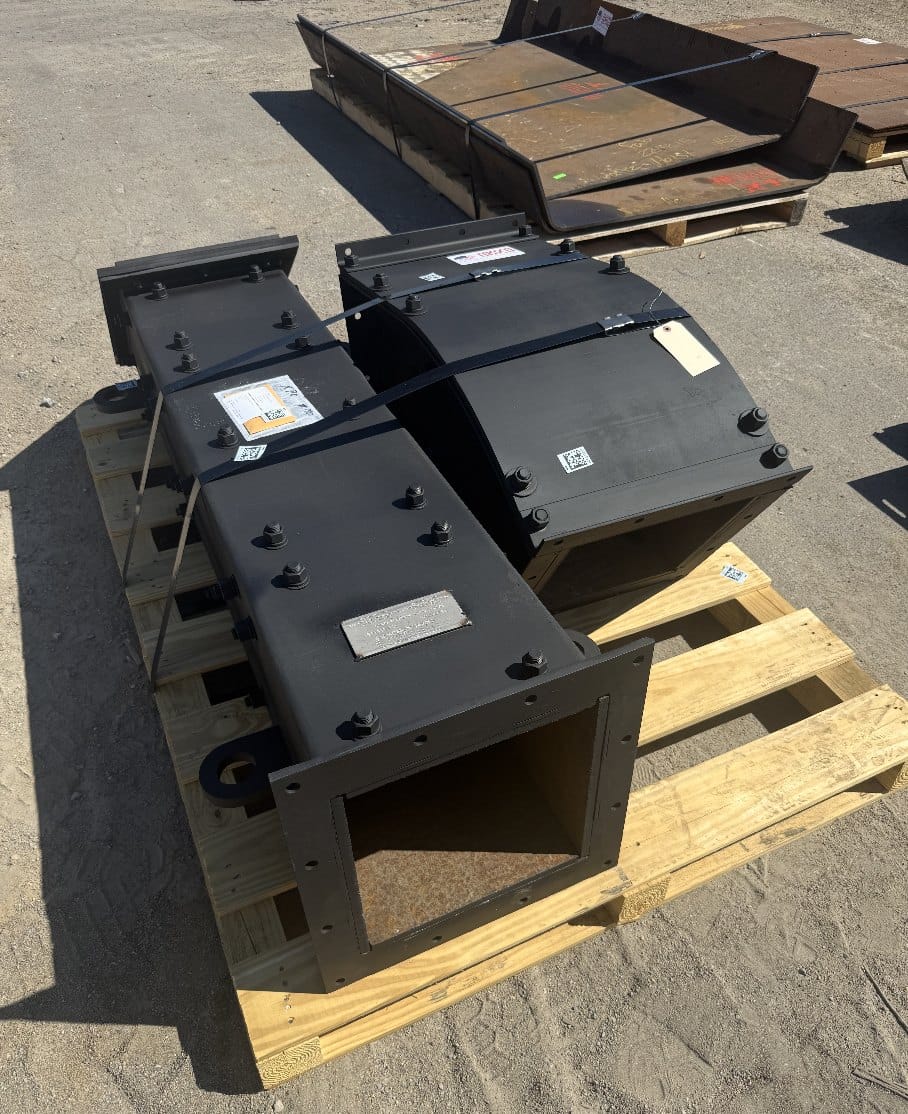
Lined chute sections, ready to ship 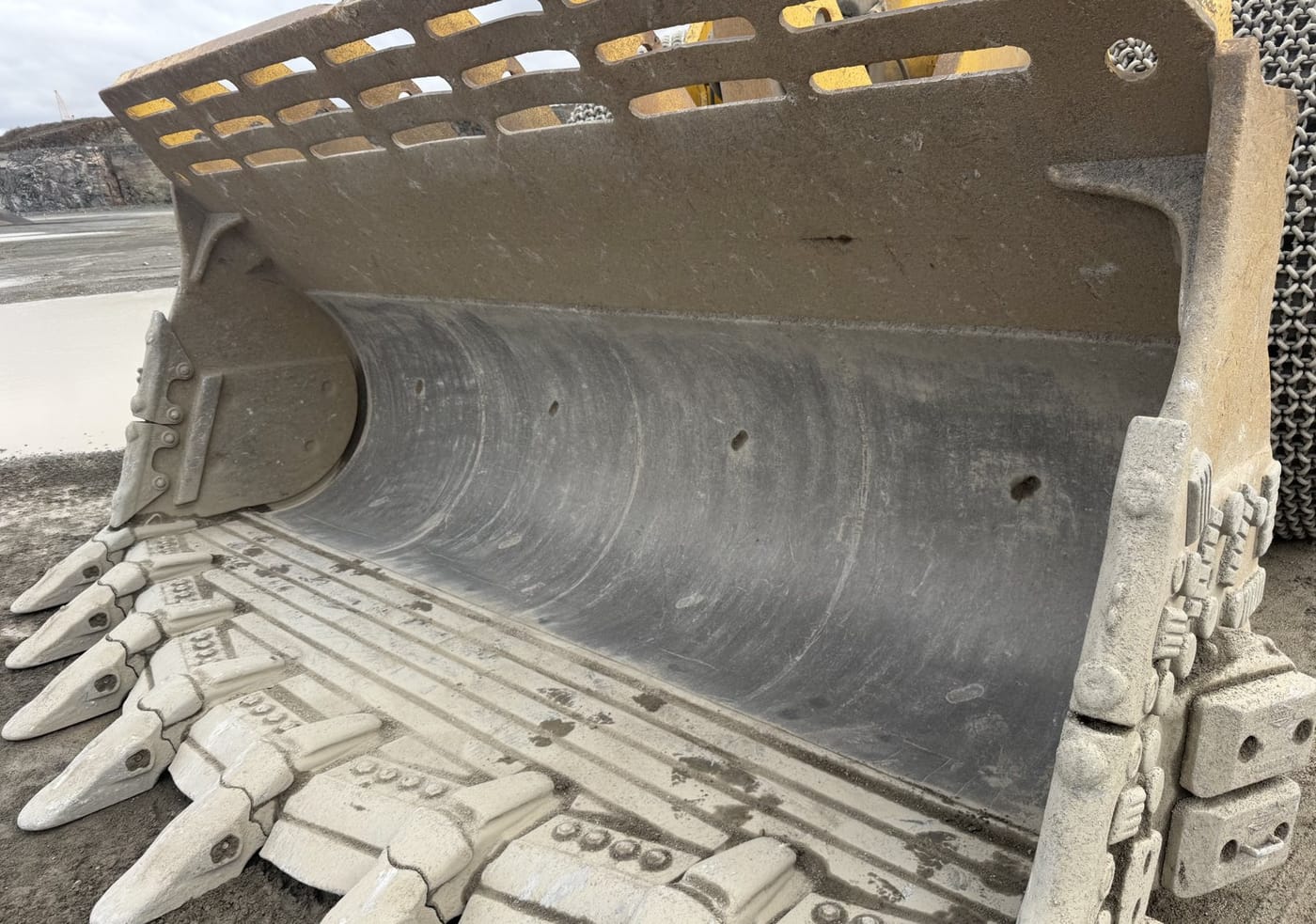
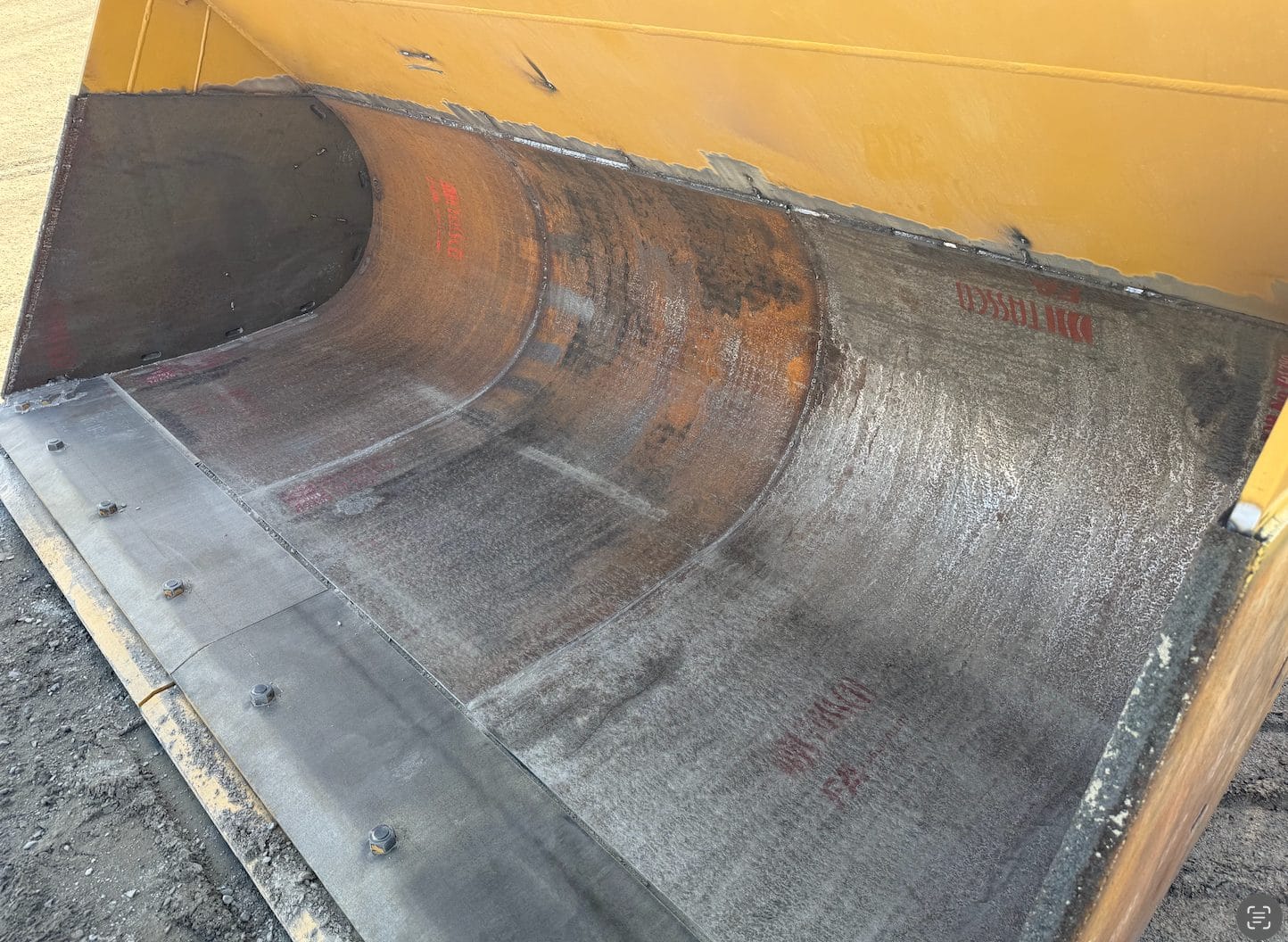
WA800 bucket lined in ¾″ Fused Alloy
Precision Flow · Engineered transfer chutes
Steady flow, less dust, longer belts
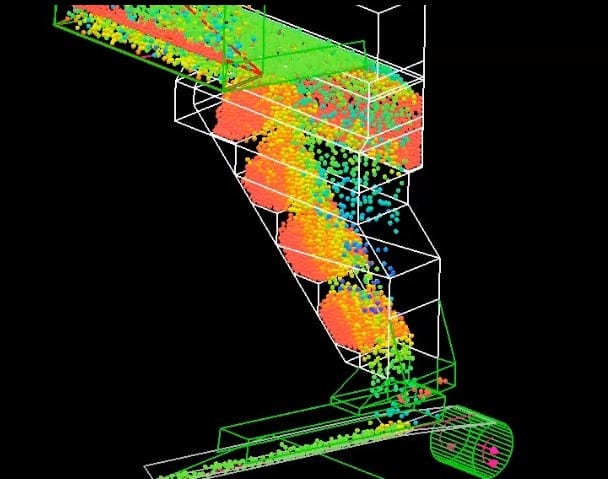
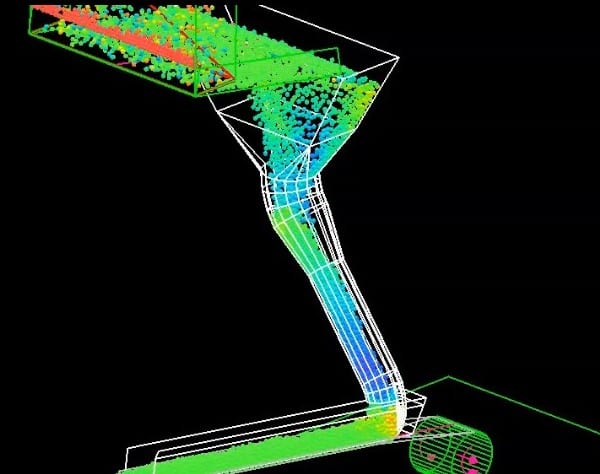
Precision Flow fixes the transfer points that plug, spill, throw dust or chew up belts. We scan the chute, model your material with DEM, and redesign it so the stream lands centered and at belt speed. You see it work in the model before we cut any steel.
05 · How we work
One supplier, one number to call
Measure
Off your spare set, off the machine, or with LiDAR scanning and DEM modeling.
Draw
Grade, thickness, holes and bends. Kept on file for next time.
Fabricate
Cut, formed, rolled, beveled and drilled in our Birmingham shop.
Deliver
Marked and kitted for the changeout, ready to bolt up or weld in.
Questions we hear
Bulk Terminals & Ports wear questions
Want it all on two pages? Download the Bulk Terminals & Ports guide (PDF).
What liner keeps wet coal and fertilizer from sticking in transfer chutes?
Fused Alloy. Its fusion-bonded chromium carbide face is smooth and bead-free, at 0.33 coefficient of friction as produced and 0.26 polished, against about 0.47 for welded overlay. That means less hang-up and carryback. If the chute geometry is the problem, Precision Flow redesigns the chute in a flow model before any steel is cut.
What wear plate holds up in fertilizer and salt service?
CORRHARD. It's a 12% chromium martensitic stainless that handles abrasion and corrosion in one plate, at nearly twice the hardness of 304. Terminals use it for fertilizer, salt and wet coal service, and for hoppers that work in salt air and washdown.
What should I use for grab bucket and dump hopper impact zones?
TASSCO HD. It's through-hardened in sections from 1¼″ to 5″ and stays tough down to −50°F, so it takes repeated drops from a grab bucket or a railcar dump without cracking. It also goes on grizzly bars and impact plates. For skirtboards and high-abrasion transfer points, COMP-C is the usual choice.
Can you redesign a transfer chute that keeps plugging?
Yes. Precision Flow redesigns the chute with DEM modeling, so you can see how material moves through it before any steel is cut. Then we build it in Birmingham and line each zone with the grade that fits the wear.
Let's talk
Tell us what's wearing out. We'll have your back.
Call us or send a note below. You'll hear back from a real person, fast.
More in equipment & bulk handling