From the log deck to the fuel bin
Lumber & Sawmills
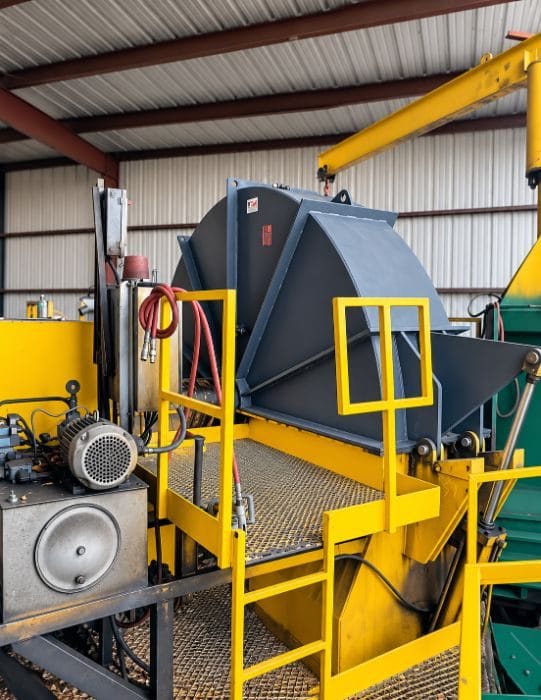
Log decks, debarkers, chippers and conveyors
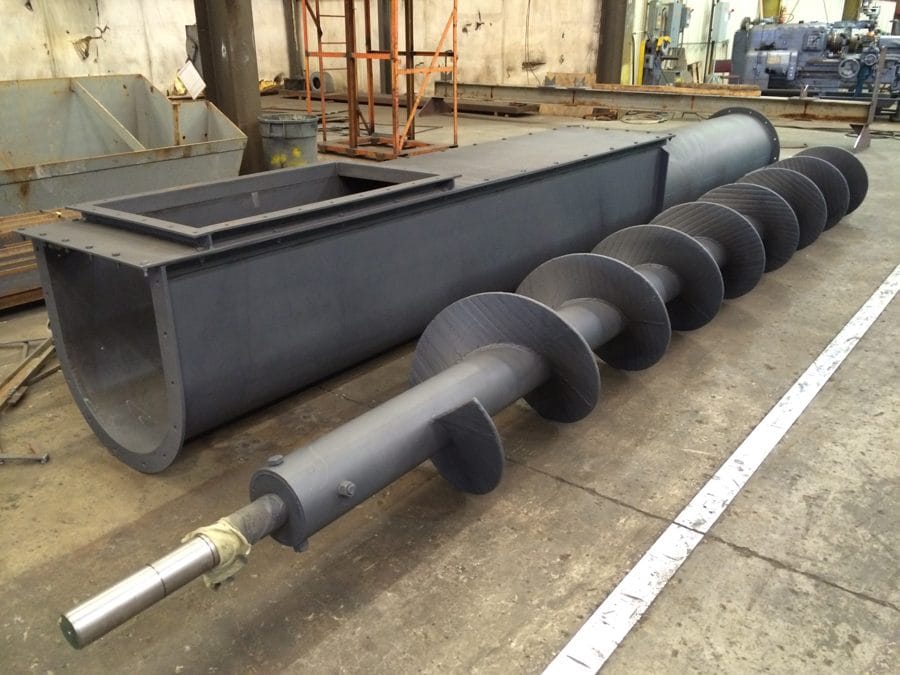
Pictured: Screw conveyor and trough
01 The wear you're fighting
Bark, chips and sawdust carry grit and moisture from the log yard into every chute, trough and drag conveyor in the mill. The parts that move them wear around the clock, and a plugged chip chute can stop the saws.
Every mill’s wear points are a little different. We measure the part, match the grade to the zone, and build it in Birmingham so the replacement fits the first time.
Where it wears first
- Log deck and step feeder wear faces
- Debarker infeed and outfeed troughs
- Chipper spouts and chip chutes
- Hog housings and blower liners
- Drag chain conveyor floors
Impact on the log deck and infeed
Logs roll and drop onto decks, step feeders and unscramblers all shift, so those wear faces take impact and scuffing together. Out in the yard, loader buckets and grapples pick up the same wear.
Wet bark and grit in debarking
Debarker troughs and bark chutes handle wet bark loaded with sand and dirt. That mix scours and corrodes at once, so a stainless grade built for abrasion fits here.
Chips and air at speed
Chipper spouts, lift tubes, elbows and blower housings carry chips and sawdust at high velocity. Wear concentrates where the flow turns, so overlay and smooth faces go there first.
Drag floors and hog feed areas
Drag chain conveyors grind bark, slabs and trim across the floor liners every shift, and hog feed areas take scrubbing and impact together. A hard overlay face keeps those floors from wearing through between shutdowns.
02 What TASSCO builds
Built off your spare set, or measured on the machine
Log yard and infeed
- Log deck and step feeder wear faces
- Unscrambler and infeed trough liners
- Chain conveyor wear strips
Debarking
- Debarker infeed and outfeed troughs
- Bark chutes
- Liners under the bark conveyor
Chipping and hogging
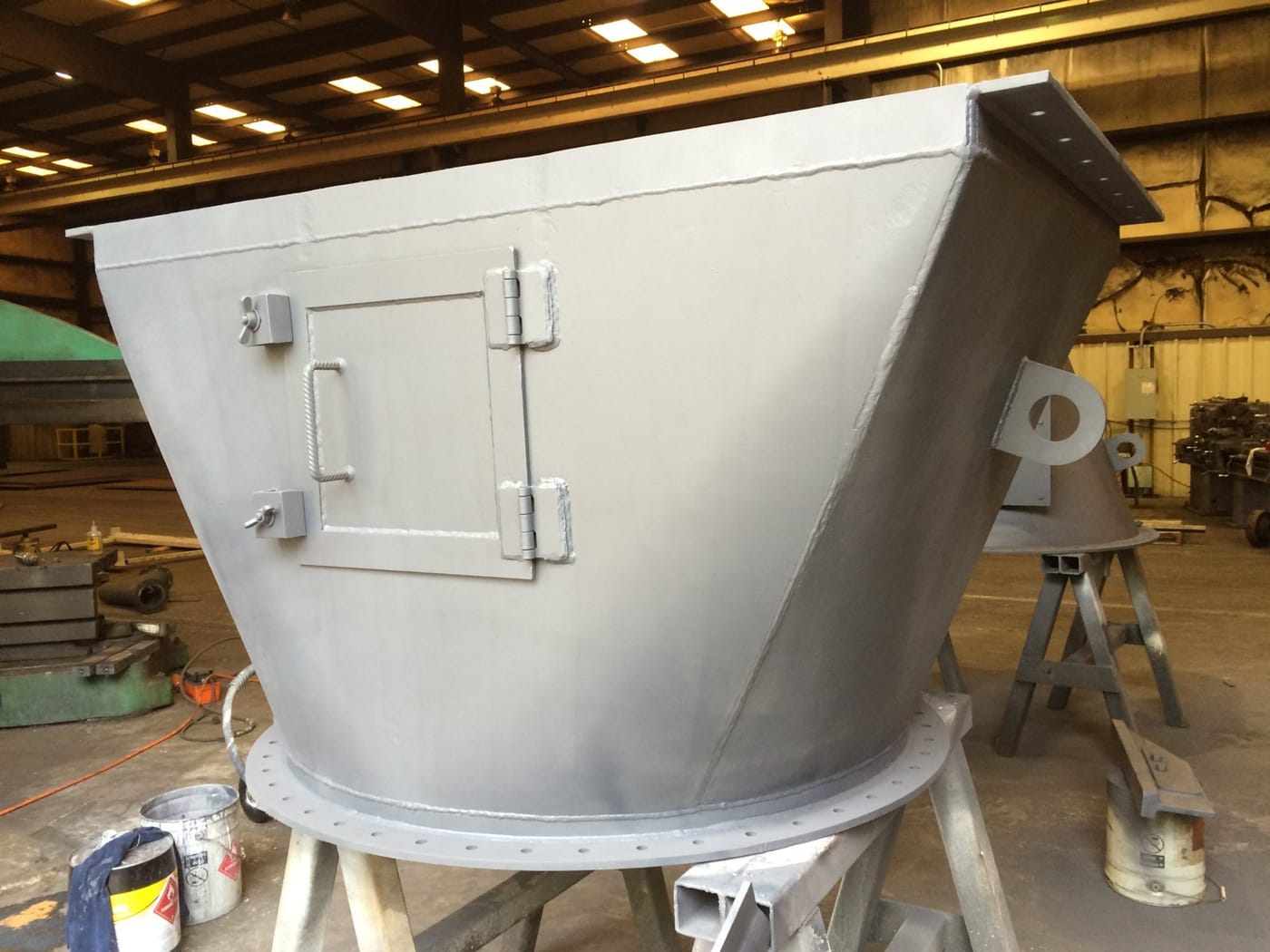
- Chipper feed spouts and chip chutes
- Transition pieces
- Hog housing and feed area liners
Pneumatic handling
- Blower and fan housing and blade liners
- Elbows and lift tubes off the chipper
- Ductwork transitions
Conveyors
- Drag chain conveyor floor liners
- Drag chain conveyor side liners
- Bark, slab, trim and waste conveyors
Screening, bins and fuel
- Chip screen chutes
- Chip and sawdust bin liners
- Truck loadout chutes
03 Right grade, right wear zone
The grades lumber & sawmills customers run
Every grade ships from stock as plate, cut to size, or fully fabricated. Every TASSCO product works here; these are the ones matched to your wear zones.
Fused Alloy
Fusion-bonded chromium carbide overlay
- Chip chutes and spouts
- Cyclone liners and cones
COMP-C
Welded chromium carbide overlay, 3/8″ to 1½″
- Hog housings and feed areas
- Drag conveyor floors
CORRHARD
12% chromium martensitic stainless, 3/16″ to 1″
- Wet bark and chip handling
- Debarker troughs
Range Tuff
High-chrome white iron weld-on wear parts
- Loader bucket lips and edges
- Grapple wear points
Flagship grade · Melted and made in USA
TASSCO XT
Hard from face to centerline, consistent from heat to heat, and your shop welds it with standard procedure. Stocked 3/16″ to 1″.
04 Shop-built, field-proven
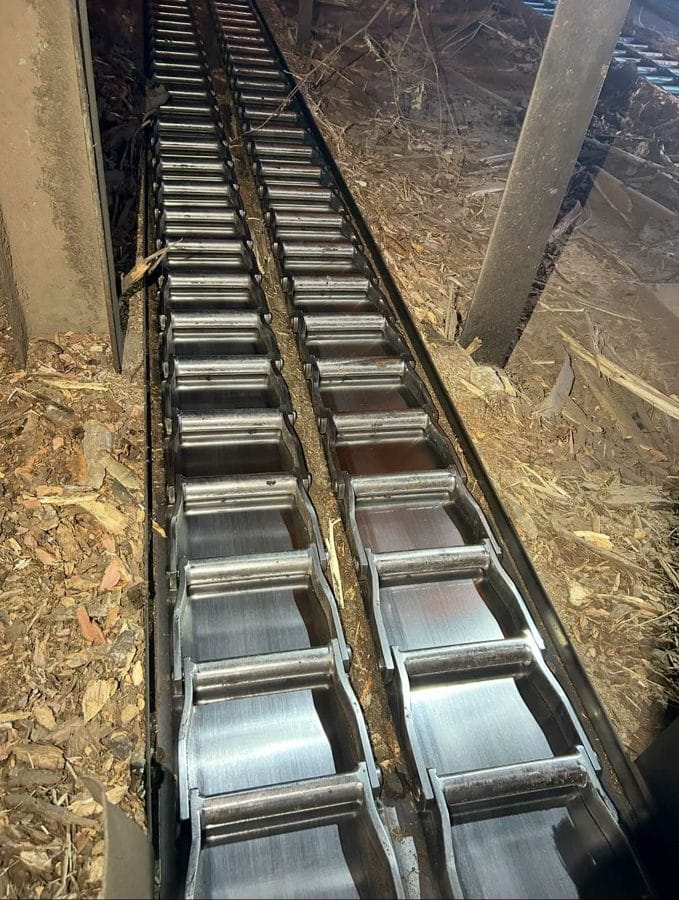
Drag chain conveyor floor liner 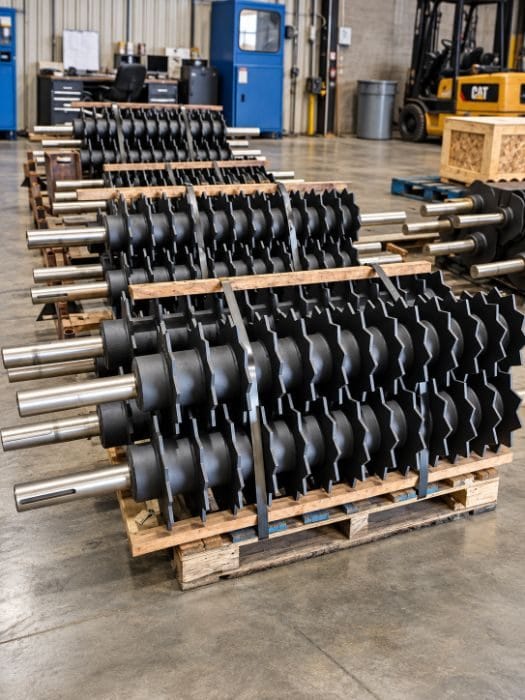
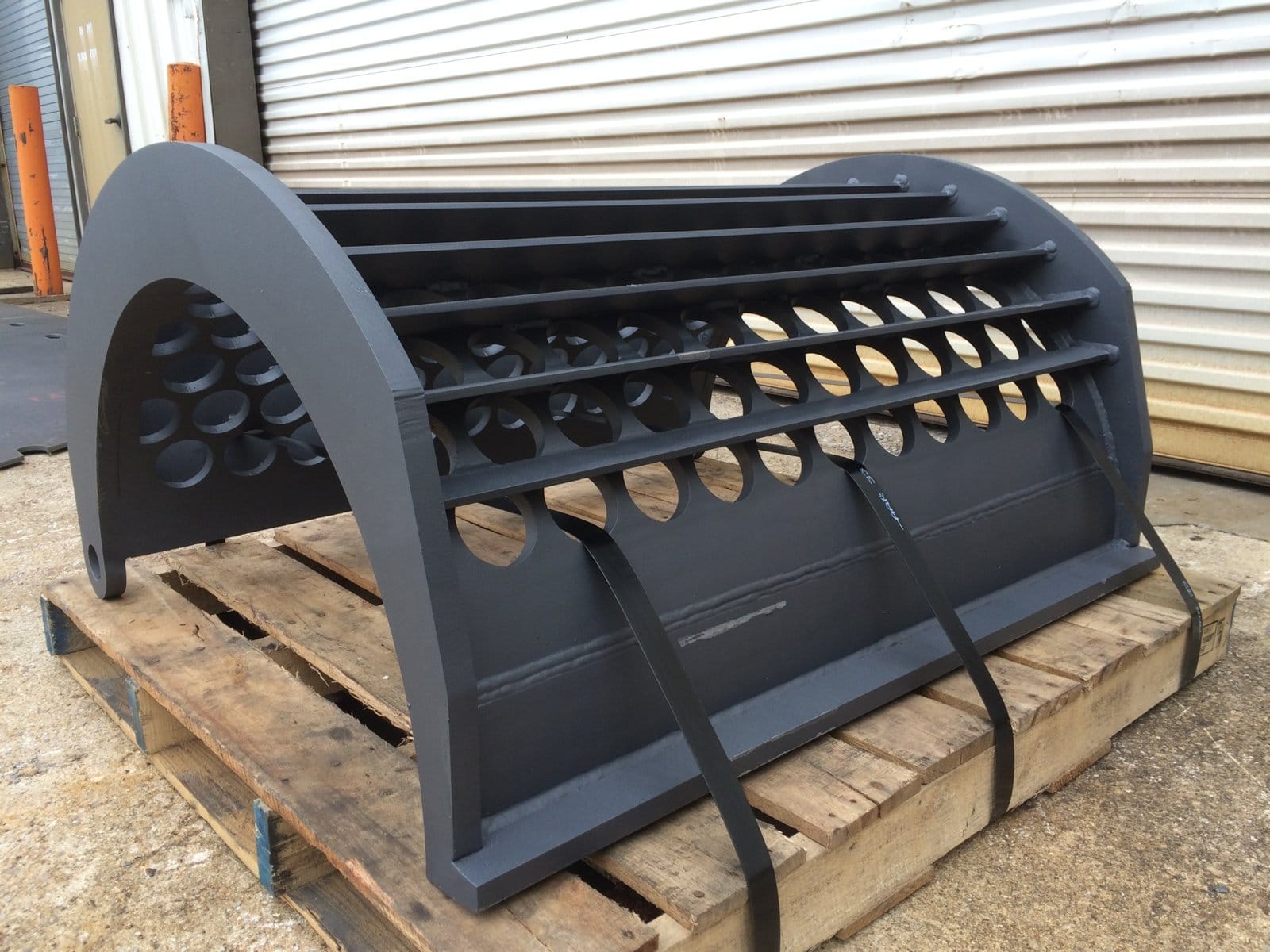
XT bark scalping discs
05 · How we work
One supplier, one number to call
Measure
Off your spare set, off the machine, or with LiDAR scanning and DEM modeling.
Draw
Grade, thickness, holes and bends. Kept on file for next time.
Fabricate
Cut, formed, rolled, beveled and drilled in our Birmingham shop.
Deliver
Marked and kitted for the changeout, ready to bolt up or weld in.
Questions we hear
Lumber & Sawmills wear questions
Want it all on two pages? Download the Lumber & Sawmills guide (PDF).
What's the best wear liner for a sawmill drag chain conveyor floor?
Most mills use COMP-C on drag conveyor floors. It's a 60 HRC chromium carbide overlay welded to a mild steel base, so the face takes the abrasion and the base forms and welds with conventional practice. Mills use it in hog housings and feed areas too.
How do I stop chips from hanging up in chip chutes and spouts?
Line them with Fused Alloy. Its smooth, bead-free face runs 0.33 CoF as produced, against about 0.47 for welded CCO, so chips have less to catch on, and it lasts about twice as long as welded CCO. Mills also use it for cyclone liners and cones.
What plate works for wet bark and debarker troughs?
CORRHARD, a 12% chromium martensitic stainless plate. It's nearly twice as hard as 304 with similar corrosion resistance, so it handles wet bark and chips that wear and corrode at once. Your shop welds it with standard 309L practice.
How can I make loader buckets and grapples last longer in the log yard?
Weld on Range Tuff. The parts are 700 BHN high-chrome white iron on a mild steel backer, in chocky bars, buttons, donuts and roll bars. Mills use them on bucket lips and edges and on grapple wear points, so you replace the bar instead of the bucket.
Let's talk
Tell us what's wearing out. We'll have your back.
Call us or send a note below. You'll hear back from a real person, fast.