From the pile to the bale
Metal Recycling & Scrap
Shredders, balers, shears and downstream separation
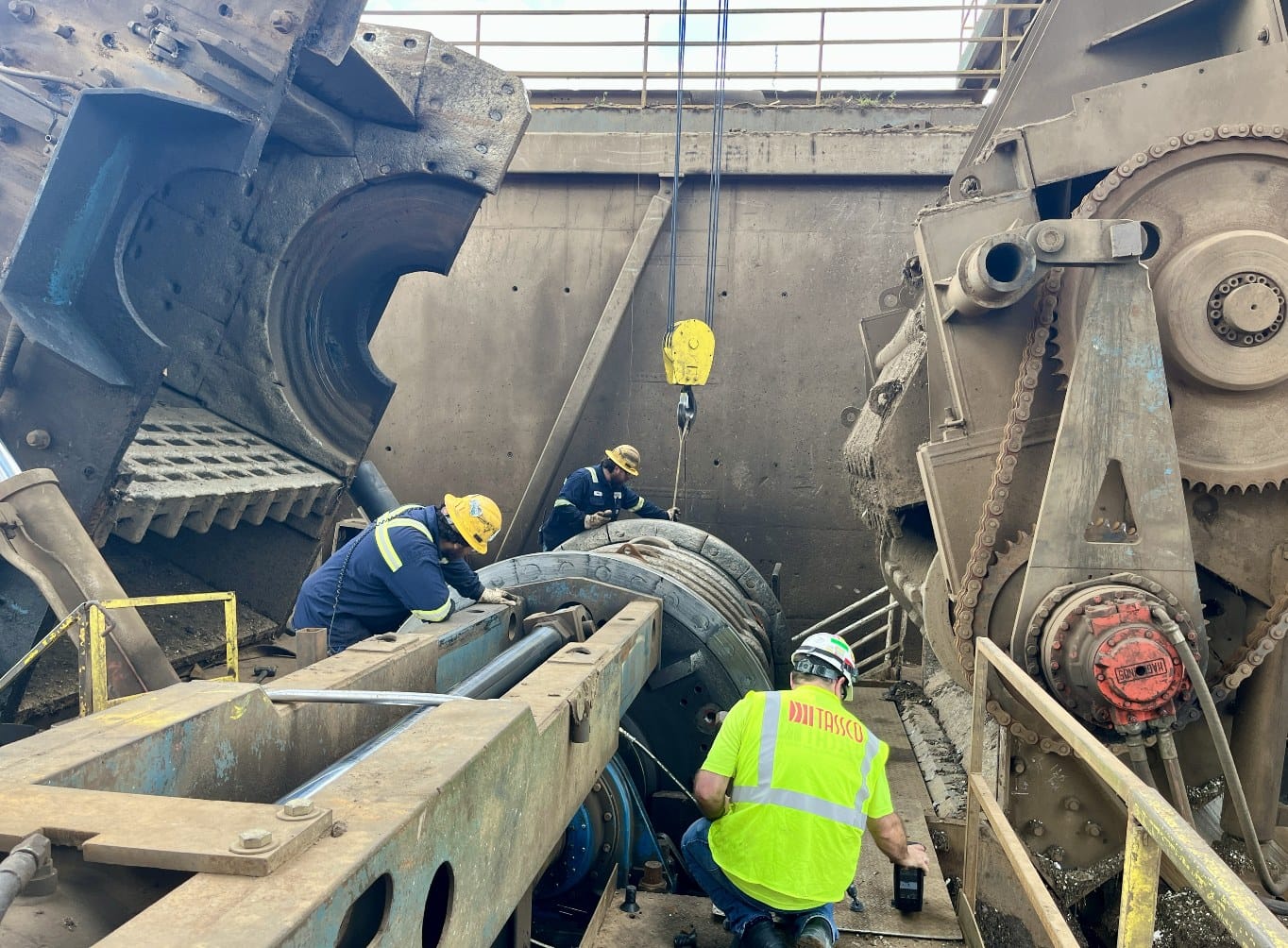
Pictured: TASSCO field service at a shredder
01 The wear you're fighting
Scrap is the least predictable feed there is. Car bodies, heavy melt and white goods hit the shredder infeed, the mill and the baler box in no particular order, and every liner that gives out early stops the yard.
Every scrap yard wears differently. Send us a photo of your worst part, a worn liner or an OEM number, and we’ll tell you what we’d do with it.
Where it wears first
- Intake spreader bars and apron floor liners
- Under-mill chutes and deflector domes
- Rotor caps, half moons and grate bars
- Baler and shear box liners
- Mag drum covers and feeder liners
Impact and gouging at the infeed
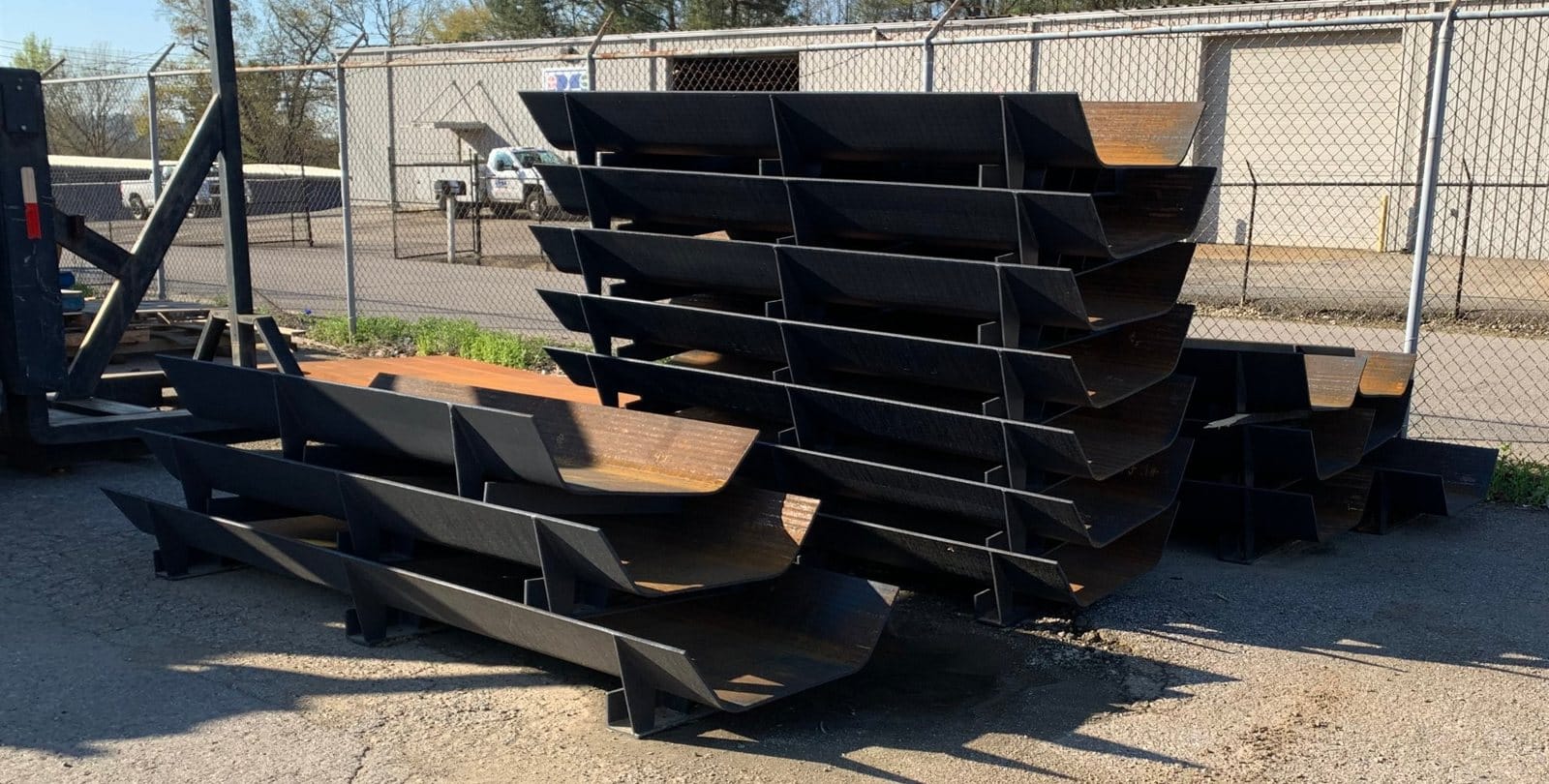
Whole cars, appliances and heavy melt drop onto the apron and get dragged into the mill by the feed rolls. Spreader bars and apron floors take gouging hits with every load, so they need thick, through-hardened plate that won't crack or dish.
Sharp shred after the mill
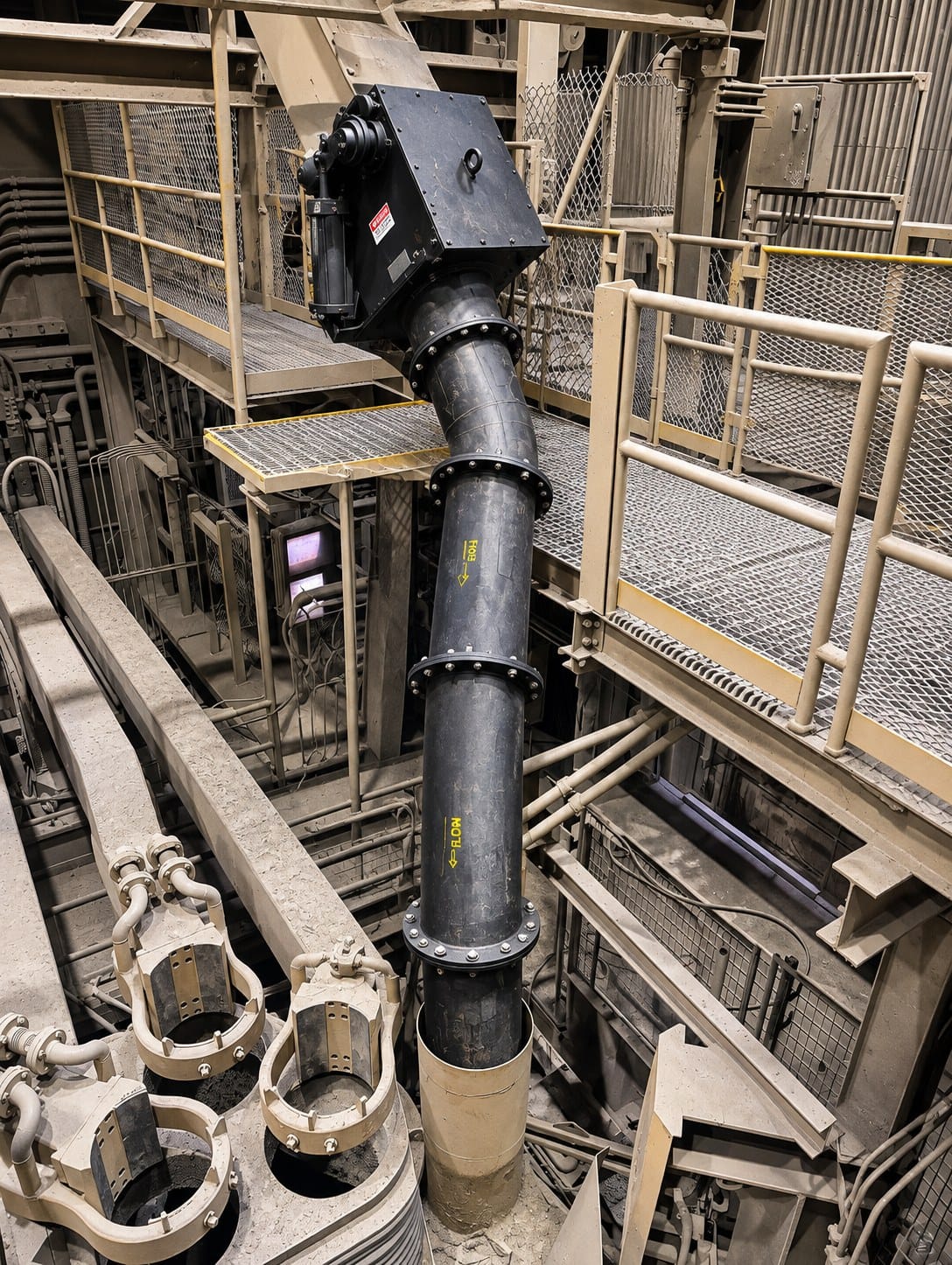
Steel leaves the mill as a stream of jagged fragments mixed with dirt and glass. Under-mill chutes, deflector domes and feeder pans lose metal to that stream all shift, and that's where chromium carbide overlay pays for itself.
Crushing force in balers and shears
A baler ram or shear crosshead drives loose scrap against the box walls and floor at full hydraulic pressure. Liners scuff and gouge under that load and pins wear out of round, so the box needs hard plate and the pins need through-hardened bar.
Fluff and fines downstream
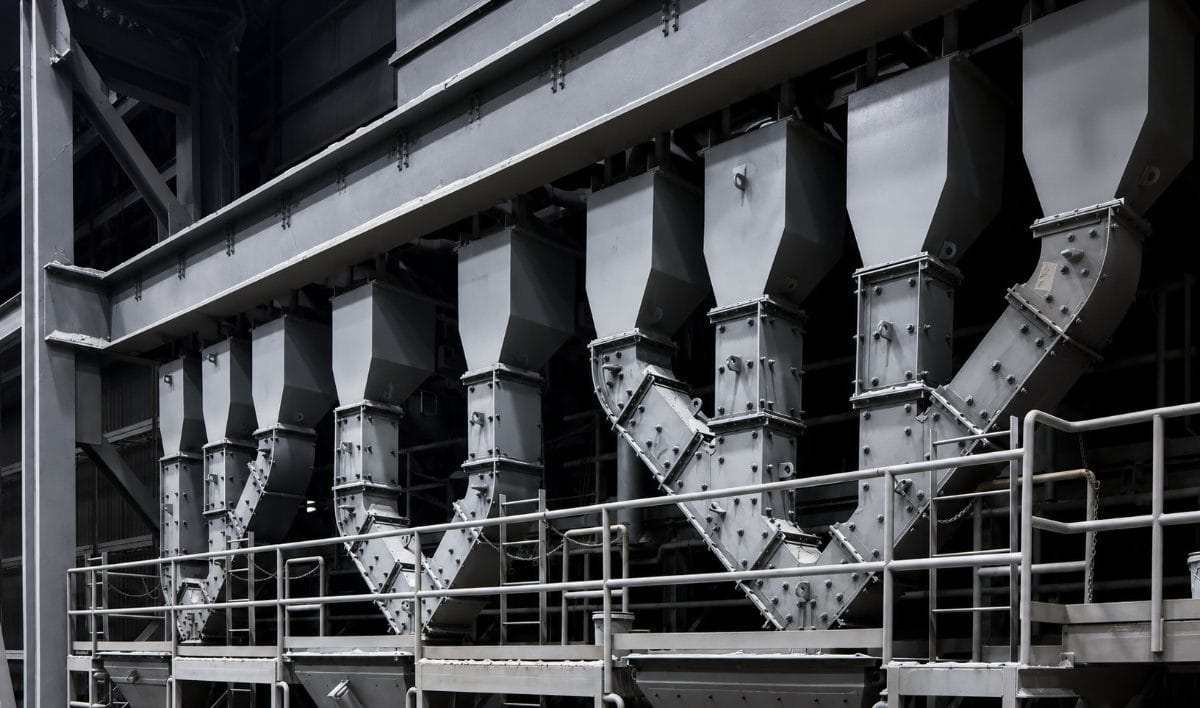
Shredder fluff, dirt and fines catch on weld beads and rough seams in mag feeders, Z-boxes and split chutes. A smooth, bead-free face keeps each stream moving to the right place and keeps your picking line fed.
02 What TASSCO builds
Built off your spare set, or measured on the machine
Shredder infeed and mill
- Intake spreader bars, apron floor liners
- Apron side and infeed slide liners
- Under-mill chute and wall liner sets
Rotor and mill internals
- Rotor half moons and piece sets
- End disc caps and cap sets
- Grate bars, ½″ through ⅞″
Balers
- Single and two-ram baler liner sets
- Long ram top, bottom and bale door liners
- Discharge liners and subfloor plates
Shears
- Shear liners and bed liners
- Repair liners built off your worn set
- Clamp block and crosshead shear pins
Downstream separation
- Magnet drum covers, rebuilds, sprockets
- Mag feeder and Z-box feeder liners
- Picking house feeder and split chutes
Air system and yard iron
- Cyclones, transitions, vortex finders
- Blower wheel discs, fins and strips
- Loader bucket liners and cutting edges
03 Right grade, right wear zone
The grades metal recycling & scrap customers run
Every grade ships from stock as plate, cut to size, or fully fabricated. Every TASSCO product works here; these are the ones matched to your wear zones.
TASSCO HD
Heavy-gauge wear plate, 1¼″ to 5″
- Baler and shear box liners
- Intake spreader bars
COMP-C
Welded chromium carbide overlay, 3/8″ to 1½″
- Chutes and pan liners
- Downstream transfer points
Fused Alloy
Fusion-bonded chromium carbide overlay
- Under-mill chutes, deflector domes
- Mag and Z-box feeder liners
Flagship grade · Melted and made in USA
TASSCO XT
Hard from face to centerline, consistent from heat to heat, and your shop welds it with standard procedure. Stocked 3/16″ to 1″.
04 Shop-built, field-proven
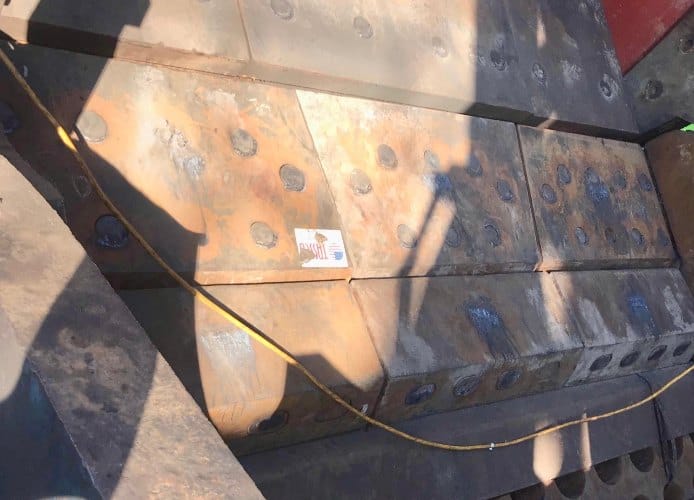
HD intake spreader liners 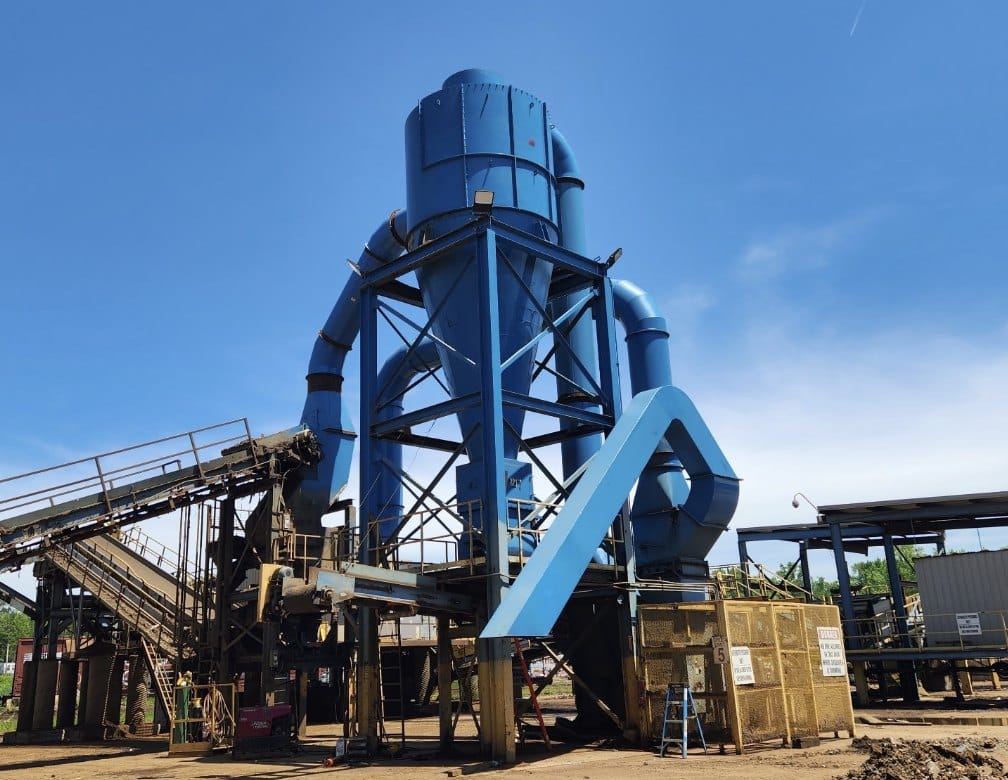
Shredder air system cyclone 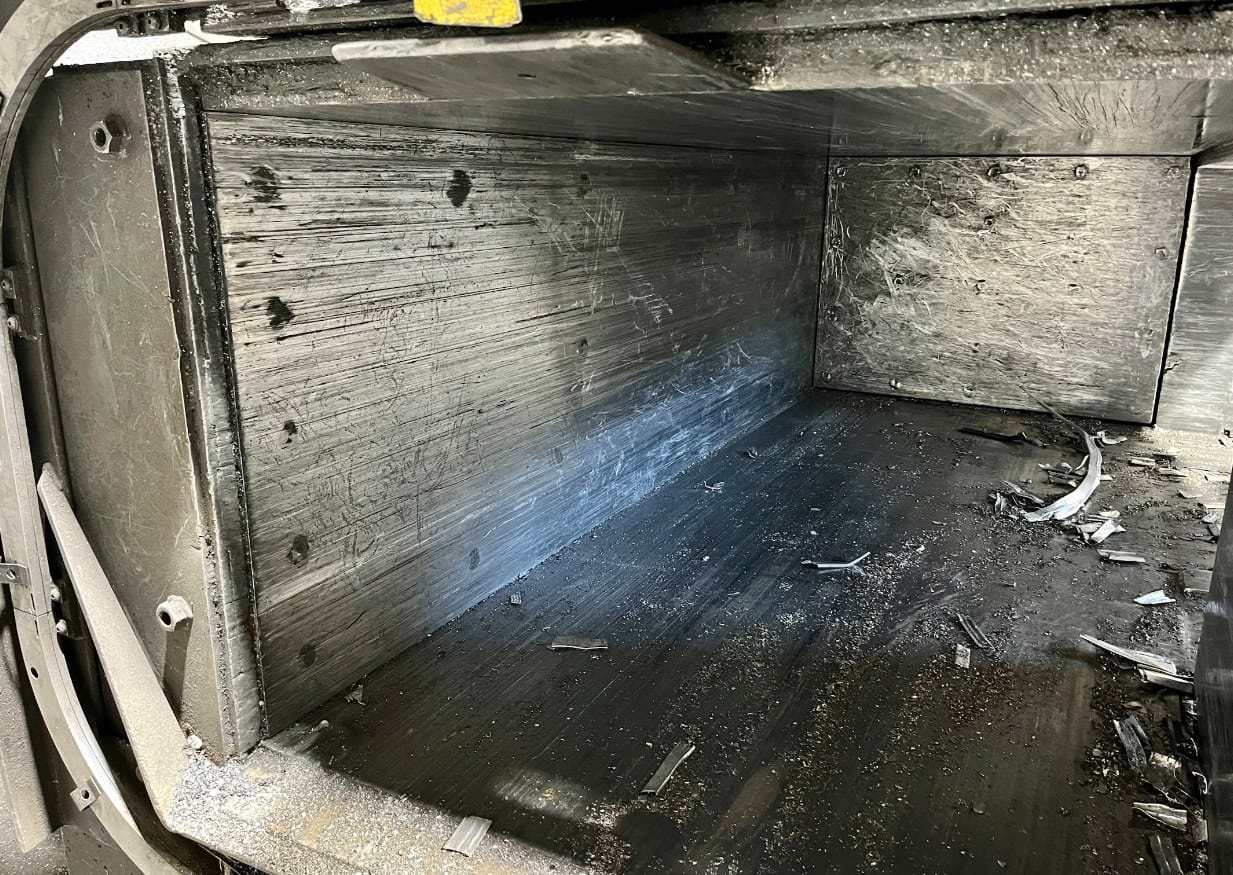
Baler liner set, installed
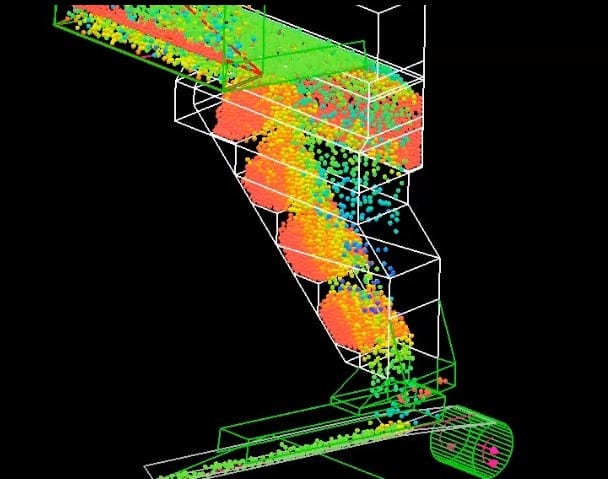
Precision Flow · Engineered transfer chutes
Steady flow, less dust, longer belts
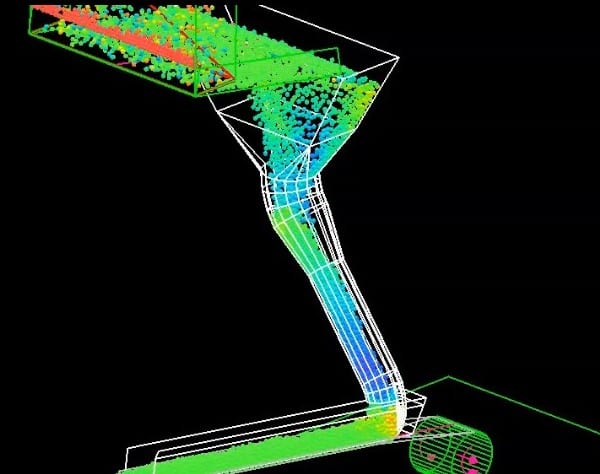
Precision Flow fixes the transfer points that plug, spill, throw dust or chew up belts. We scan the chute, model your material with DEM, and redesign it so the stream lands centered and at belt speed. You see it work in the model before we cut any steel.
05 · How we work
One supplier, one number to call
Measure
Off your spare set, off the machine, or with LiDAR scanning and DEM modeling.
Draw
Grade, thickness, holes and bends. Kept on file for next time.
Fabricate
Cut, formed, rolled, beveled and drilled in our Birmingham shop.
Deliver
Marked and kitted for the changeout, ready to bolt up or weld in.
Questions we hear
Metal Recycling & Scrap wear questions
Want it all on two pages? Download the Metal Recycling & Scrap guide (PDF).
What wear plate should I use for shredder intake spreader bars?
Spreader bars take heavy impact, so most yards run TASSCO HD there. It's through-hardened in sections from 1¼″ to 5″ and stays tough down to −50°F, so it takes repeated hits without cracking. Yards use it for baler and shear box liners too.
What's the best liner for under-mill chutes on a metal shredder?
Under-mill chutes and deflector domes see a steady stream of sharp, abrasive shred, so chromium carbide overlay usually lasts longest. Fused Alloy is fusion-bonded with a smooth, bead-free face and runs about twice the life of welded CCO. COMP-C, a welded overlay, works well in chutes, pan liners and downstream transfer points.
What material should I use for baler and shear pins?
TASSCO Duralloy, a through-hardened round bar from ¾″ to 10″ in diameter. Yards use it for shear and baler pin stock and for feed roll and conveyor shafting.
Can you build shredder or baler liners without OEM drawings?
Yes. Send a drawing, a worn part, an OEM number or a photo. We draw it, keep the drawing on file, and cut and fabricate the set in our Birmingham shop. If a transfer chute keeps plugging, Precision Flow redesigns it in a flow model before any steel is cut.
Let's talk
Tell us what's wearing out. We'll have your back.
Call us or send a note below. You'll hear back from a real person, fast.