From the quarry to the finish mill
Cement
Feeders, crushers, mills, kilns, fans and chutes
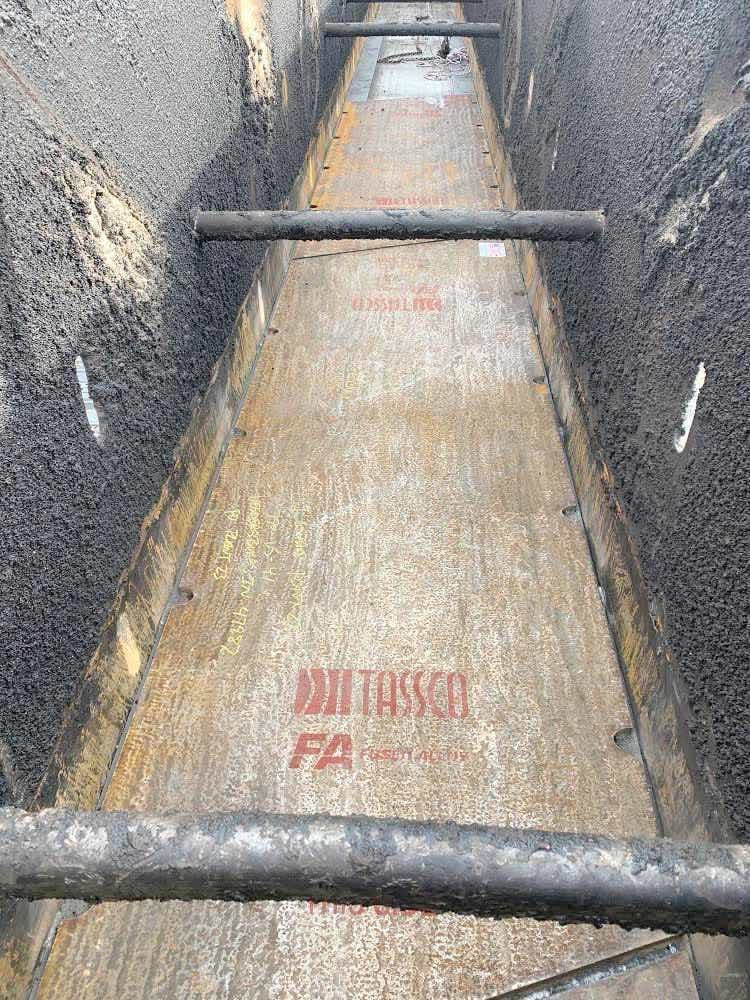
Pictured: Raw mill reject chamber liners, installed
01 The wear you're fighting
Your cement plant runs on a schedule built around the outage. Every feeder, mill, chute and fan between raw material receiving and the finish mill wears on its own clock, and a part that fails between outages costs you production you planned on.
You’ll find TASSCO liners from raw material receiving to the finish mill. We measure the part on site or scan it, match the grade to each wear zone, and build it in our Birmingham shop for your outage.
Where it wears first
- Box feeder paddles and apron feeder flights
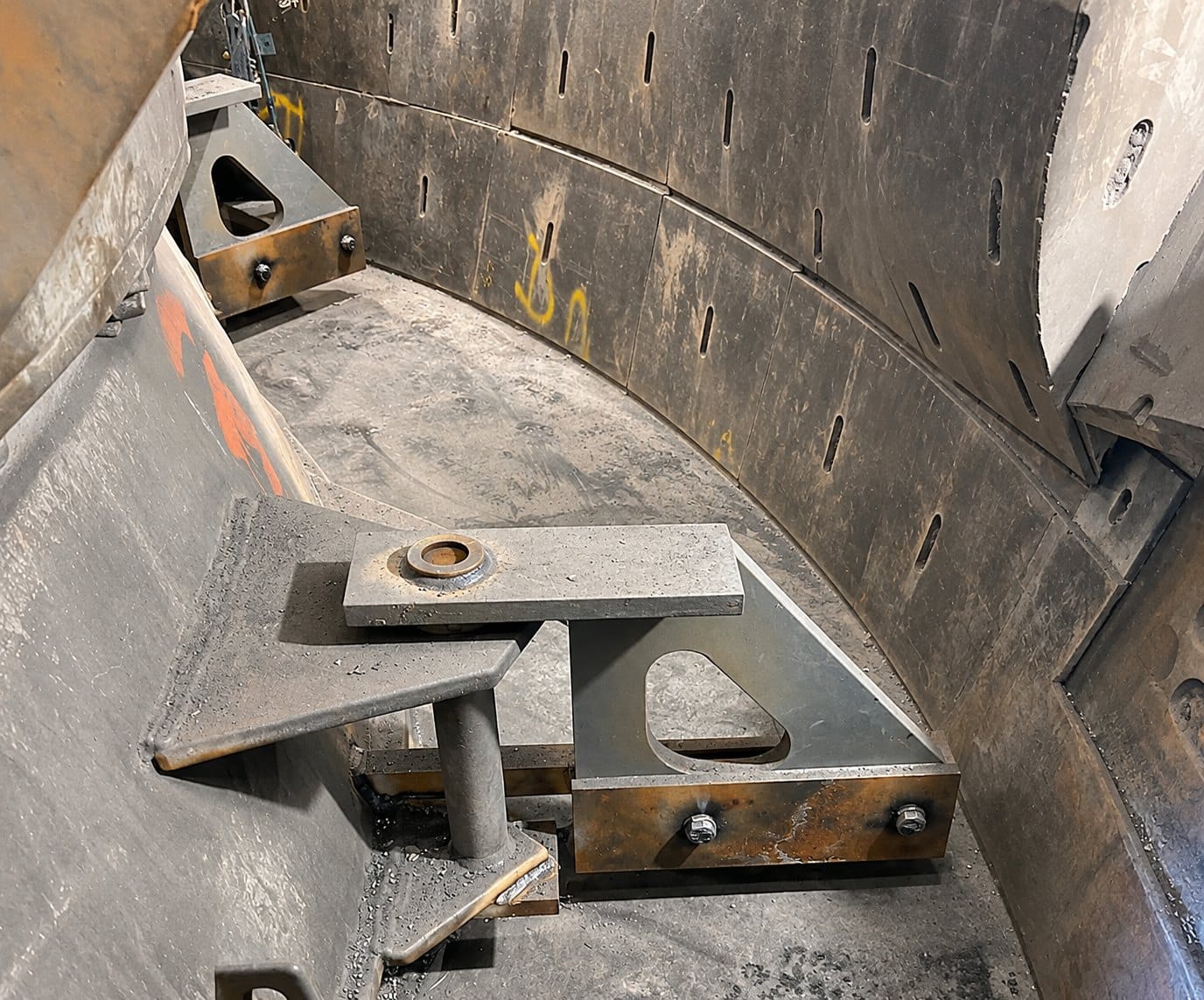
- Raw mill feed chutes and reject chambers
- Separator cones and rock guards
- Clinker drag conveyors and transfer chutes
- Ball mill inlet cones and diaphragm grates
- ID fan scrolls and blades
Impact at receiving and crushing
Limestone and shale come off the truck and into box feeders, apron feeders and the primary crusher at full drop height. Paddles, flights and crusher side liners need plate that takes repeated hits.
Sliding abrasion through the mills
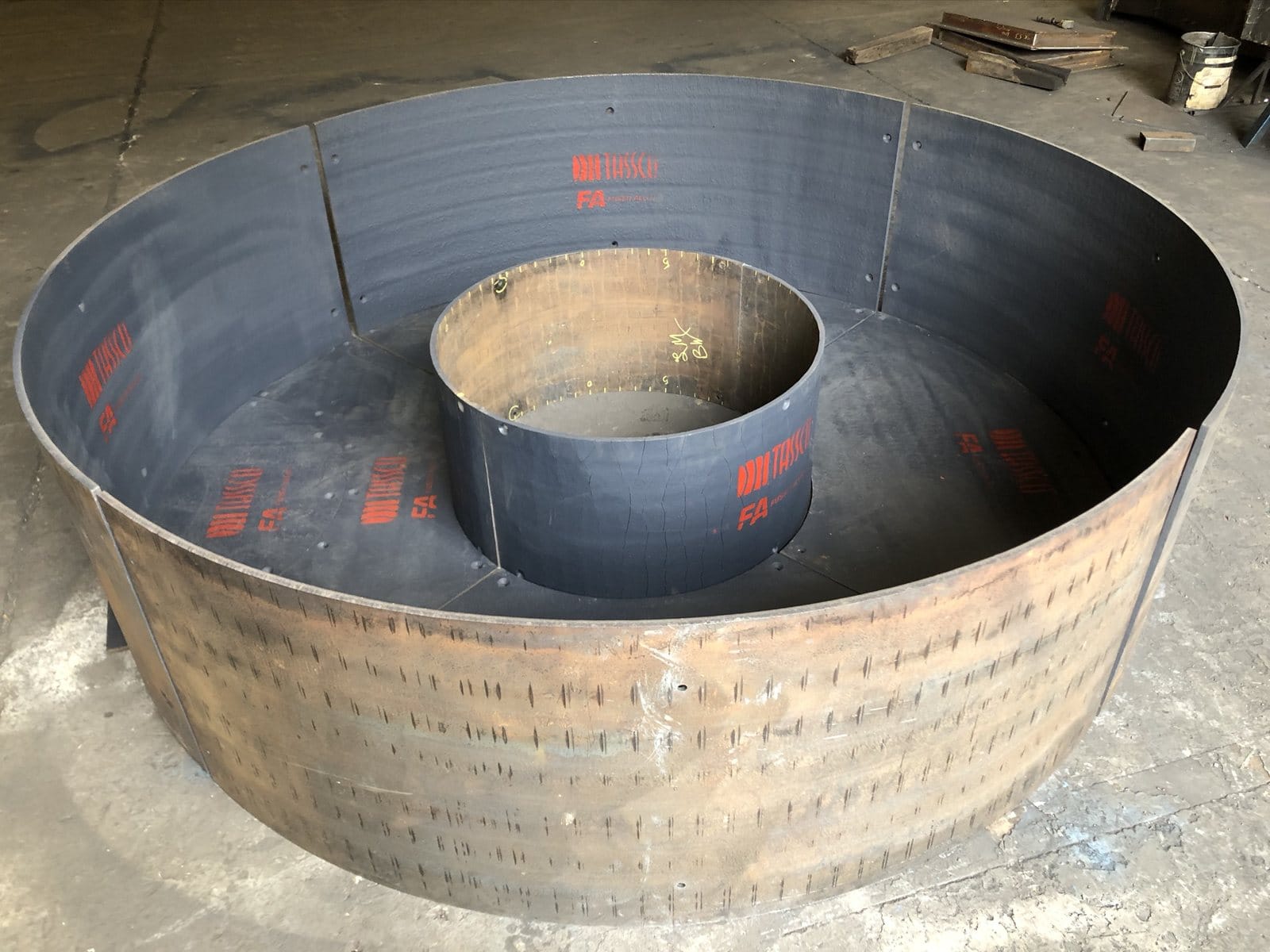
Raw meal and cement are fine, abrasive and moving at high volume. Separator cones, mill liners, feed chutes and scatter rings lose metal steadily, so a hard chromium carbide face pays for itself.
Hot clinker and dust-laden gas
Clinker leaves the cooler hot and sharp, and ID fans pull gas loaded with dust. Drag conveyors, clinker chutes and fan scrolls and blades wear fast, and a dense overlay face holds its shape longer.
Sticky clay, shale and gypsum
Clay, shale and gypsum carry moisture that corrodes carbon steel and makes material hang up in hoppers and bins. A stainless wear plate handles the corrosion and the abrasion in the same liner.
02 What TASSCO builds
Built off your spare set, or measured on the machine
Raw material receiving
- Box feeder paddles and scraper elements
- Apron and pan feeder liners and flights
- Crusher side liners, hood walls, doors
Raw grinding
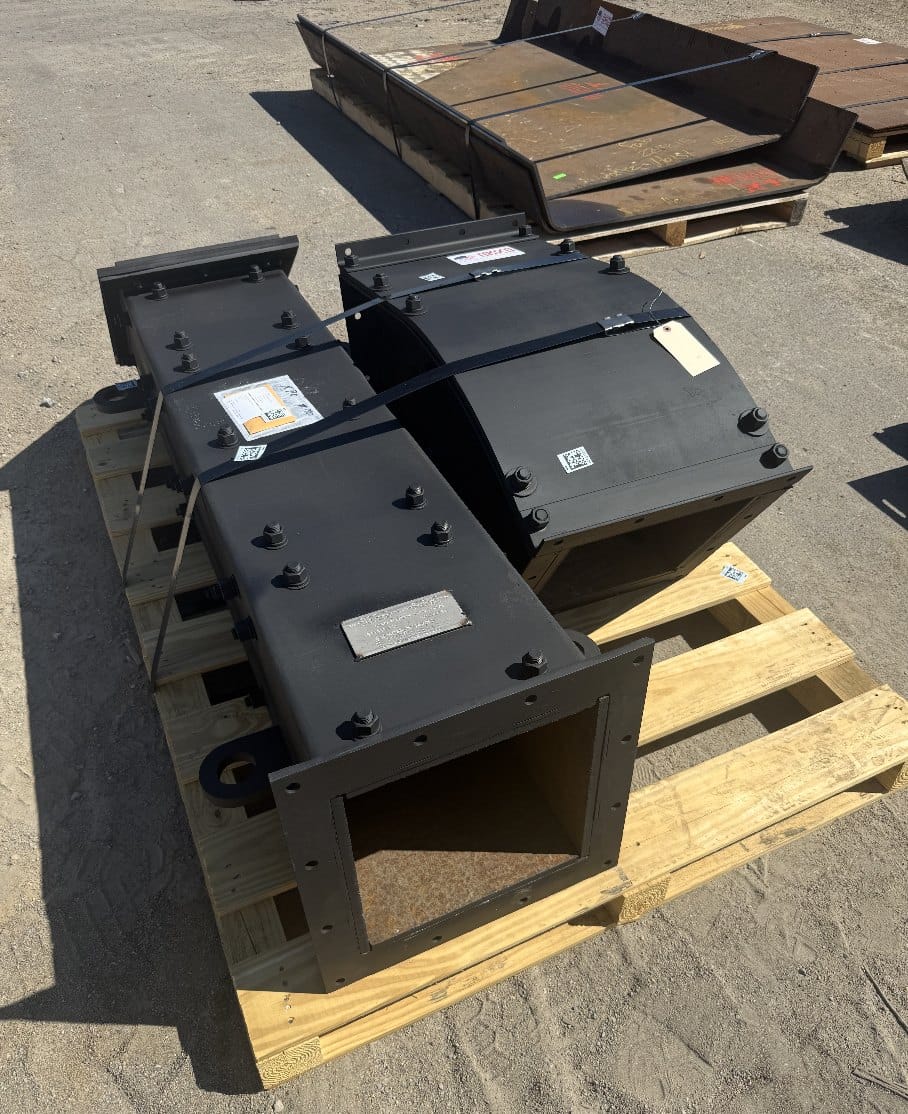
- Feed chute cassettes and outlet patches
- Body wall, plow and lower housing liners
- Rock guards, grinding path bars, scatter rings
Pyroprocessing
- Riser duct liners, meal pipes, dip tubes
- Tipping and flapper gates
- Kiln feed and alternative fuel chutes
Clinker handling
- Drag conveyor liners and discharge chutes
- Clinker transfer chutes
- Clinker bin liners
Finish grinding
- Ball mill inlet cones and feed end liners
- Center screens and diaphragm grates
- Vertical roller mill upper and lower liners
Fans, dust and load-out
- Cyclone and ID fan side and scroll liners
- Diverter gate and blade gate liners
- Gypsum and limestone hoppers, reject bins
03 Right grade, right wear zone
The grades cement customers run
Every grade ships from stock as plate, cut to size, or fully fabricated. Every TASSCO product works here; these are the ones matched to your wear zones.
COMP-C
Welded chromium carbide overlay, 3/8″ to 1½″
- Separator cones
- Mill liners
Fused Alloy
Fusion-bonded chromium carbide overlay
- Rock guards and scatter rings
- ID fan scrolls and blades
CORRHARD
12% chromium martensitic stainless, 3/16″ to 1″
- Clay and shale hoppers
- Gypsum bins and hoppers
Magna Tuff
Modular magnetic rubber liner system
- Running-line patches
- No hot work permit needed
Flagship grade · Melted and made in USA
TASSCO XT
Hard from face to centerline, consistent from heat to heat, and your shop welds it with standard procedure. Stocked 3/16″ to 1″.
04 Shop-built, field-proven
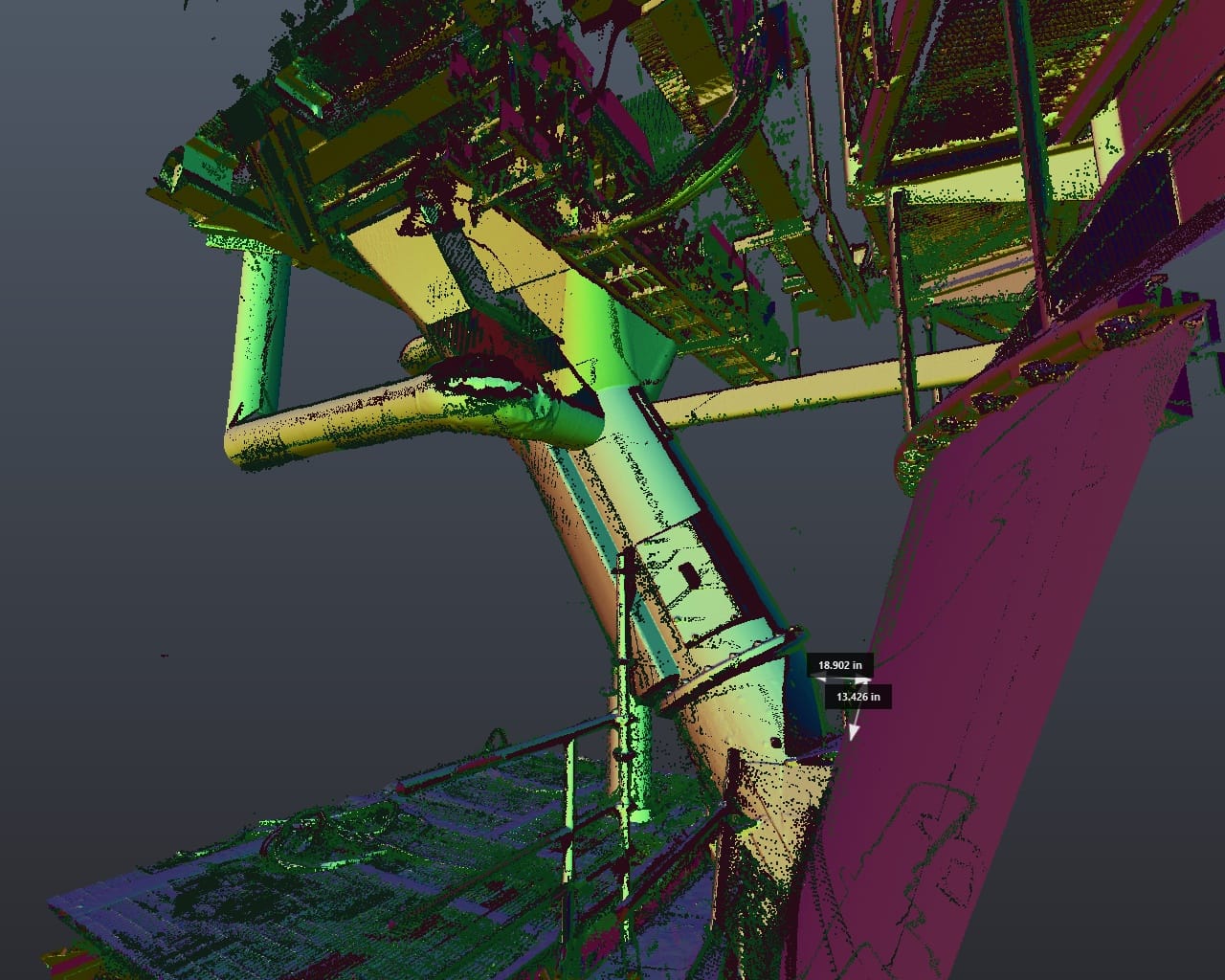
LiDAR scan of a raw mill feed chute 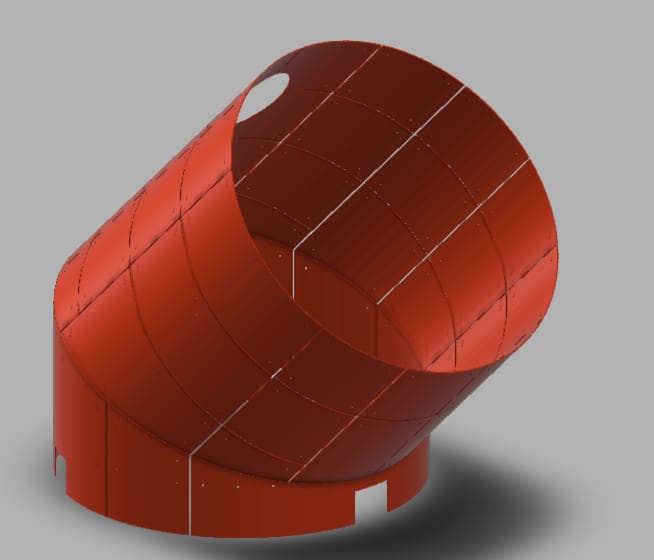
3D model of a separator liner set 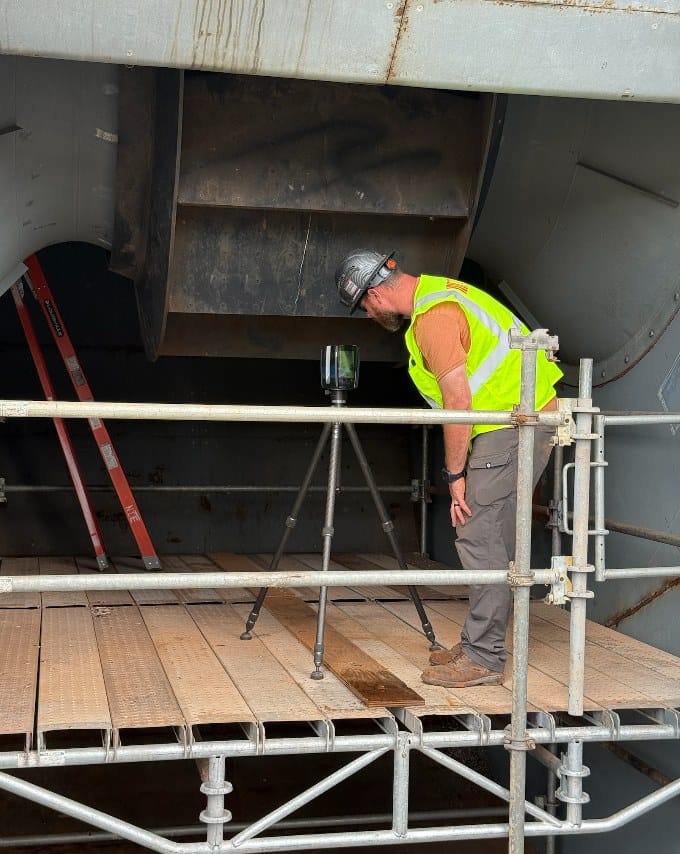
Field service scanning inside a fan housing
Precision Flow · Engineered transfer chutes
Steady flow, less dust, longer belts
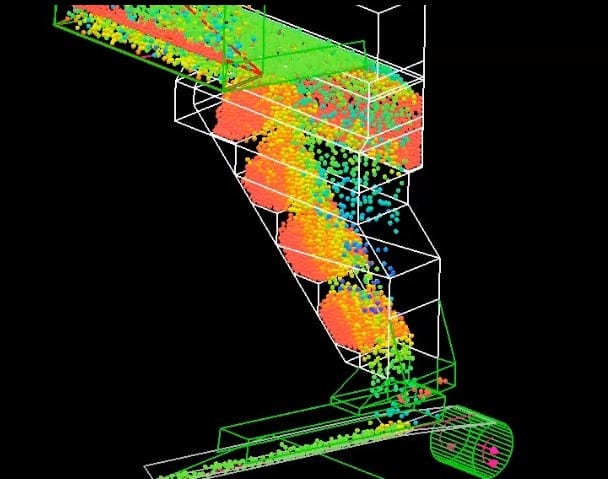
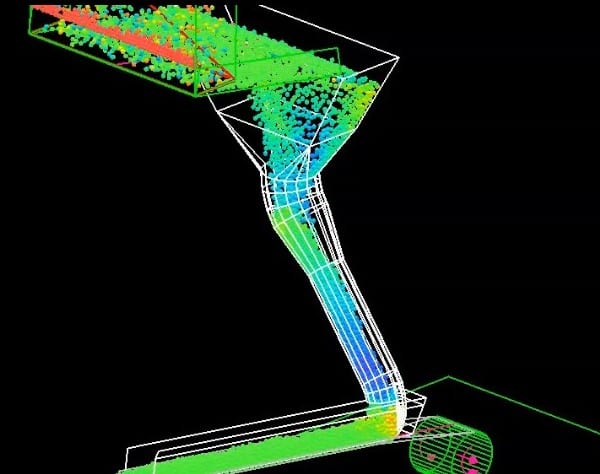
Precision Flow fixes the transfer points that plug, spill, throw dust or chew up belts. We scan the chute, model your material with DEM, and redesign it so the stream lands centered and at belt speed. You see it work in the model before we cut any steel.
05 · How we work
One supplier, one number to call
Measure
Off your spare set, off the machine, or with LiDAR scanning and DEM modeling.
Draw
Grade, thickness, holes and bends. Kept on file for next time.
Fabricate
Cut, formed, rolled, beveled and drilled in our Birmingham shop.
Deliver
Marked and kitted for the changeout, ready to bolt up or weld in.
What liner material works best on separator cones and mill liners?
Cement plants usually use COMP-C there. It's a chromium carbide overlay welded to a mild steel base, stocked from 3/8″ to 1½″, with a hard, carbide-rich face for sliding abrasion. The base forms and welds with conventional shop practice.
How do I extend the life of ID fan scrolls and blades?
Line them with Fused Alloy. It's a fusion-bonded chromium carbide overlay with a 700 BHN surface and about twice the service life of welded overlay. Plants use it on raw mill rock guards and scatter rings too.
Can I patch a worn chute on a running line without a hot work permit?
Yes. Magna Tuff modules are 40 Shore A rubber with rare-earth magnets built in. They snap onto any ferrous surface by hand, with no welding, fasteners or hot work permit. They're rated for 170°F continuous service, so keep them off the hot side of the plant.
Can you redesign a chute that keeps plugging or wearing through?
Yes. Precision Flow models the material flow through your chute and redesigns it before any steel is cut. We can scan the existing chute, build the new one in our Birmingham shop, and have it ready for your outage.
Let's talk
Tell us what's wearing out. We'll have your back.
Call us or send a note below. You'll hear back from a real person, fast.